

When my neighbor removed the evergreens along our shared fence, nothing technically changed about the size of our yard. The property line was the same. The fence was still there. But the garden felt smaller. The enclosure was gone.
Not physically smaller. The lot lines hadn’t moved. The fence was still where it had always been. But something invisible disappeared with those trees — a softness, a buffer, the sense that our small yard belonged to us.
On a typical Chicago city lot, houses sit close enough that you can hear a neighbor’s phone ring through an open window. Privacy isn’t built into the architecture. It has to be grown.
When the evergreens came down, the view opened abruptly. The fence line was exposed. The upper-story windows were exposed. The deck — once tucked into greenery — suddenly felt like a platform.
That was the moment I understood what enclosure actually means.
What Enclosure Really Is
Enclosure is not about blocking someone out.
It’s about allowing yourself to settle in.
Small gardens don’t just need plants. They need edges that define where the garden begins and the world recedes.
Without that edge, even a beautiful space can feel temporary — like scenery rather than a room.
Adding Structure to Restore Privacy
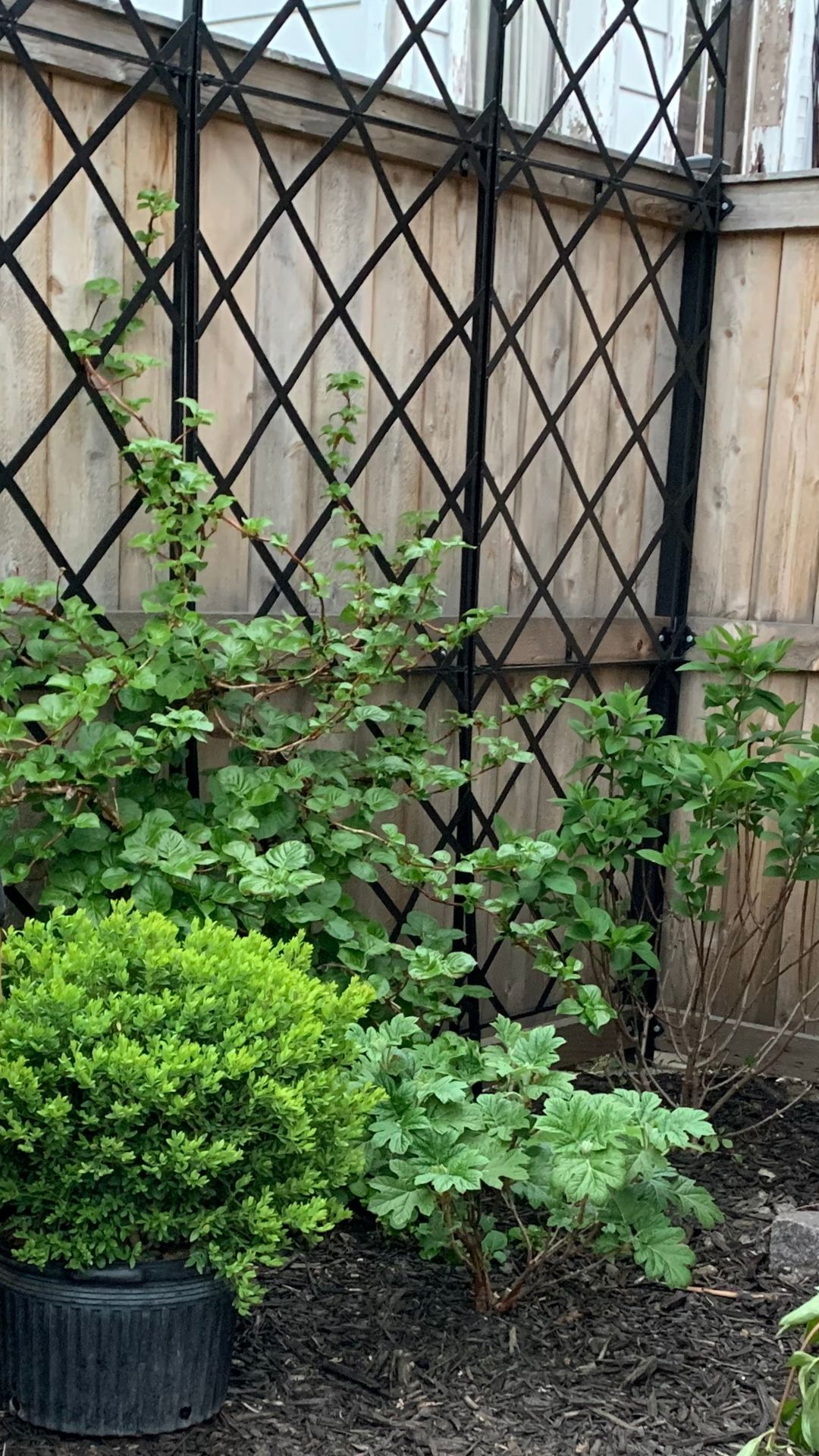
I added trellis panels that extend above the fence. Not decorative panels, but structure.
They rise just high enough to soften the line of sight between our homes and give future vines something to hold onto. The also trellis introduce pattern, rhythm, and vertical depth where there was once a flat plane.
The change wasn’t dramatic in square footage. But it was profound in feeling.
Enclosure Across the Seasons
In winter, the trellis reads clearly — black lattice against pale snow. The geometry is visible. The wall is unmistakable. The garden feels defined even when everything else has gone quiet.
In spring, the first green shoots begin to reach into the grid. Structure and plant come into conversation. You can see both intention and growth.
By summer, the wall begins to disappear behind leaves. The enclosure becomes lived-in rather than declared. It no longer announces itself. It simply holds the space.
That holding changes everything.
The deck feels closer to the garden. The garden feels less exposed. Conversations soften. Even the air feels calmer.
Why Small Gardens Need Edges
Small gardens need edges. Not harsh edges. Not defensive ones. But edges that allow the interior to breathe.
A wall — whether hedge, fence, or trellis — is not a barrier. It is a backdrop, which allow planting to layer forward, creates depth where there is very little square footage and gives a small yard the confidence of a room.
Without enclosure, a garden is scenery.
With enclosure, it becomes a place.
And on a narrow city lot, that distinction is everything.


