

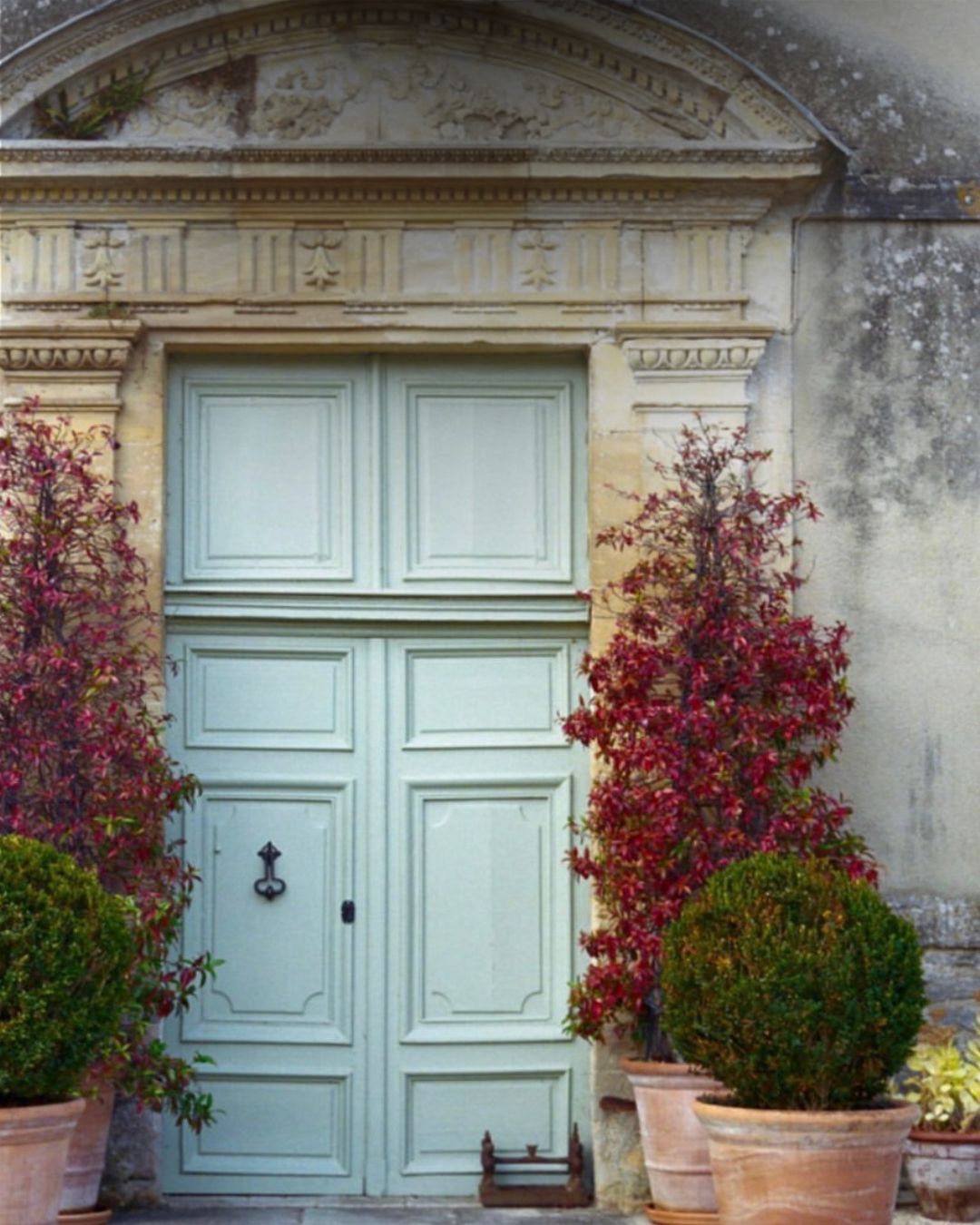
In small spaces, every step matters. A garden doesn’t need to be large to feel expansive; it needs moments of transition. Designers call these moments thresholds — the in-between spaces that mark entry from one area to another.
A threshold changes how your body moves. It slows you, frames your view, and signals that you’re entering somewhere distinct. That shift — subtle but perceptible — is what makes a compact garden feel layered rather than limited.
Framed Entry: The Archway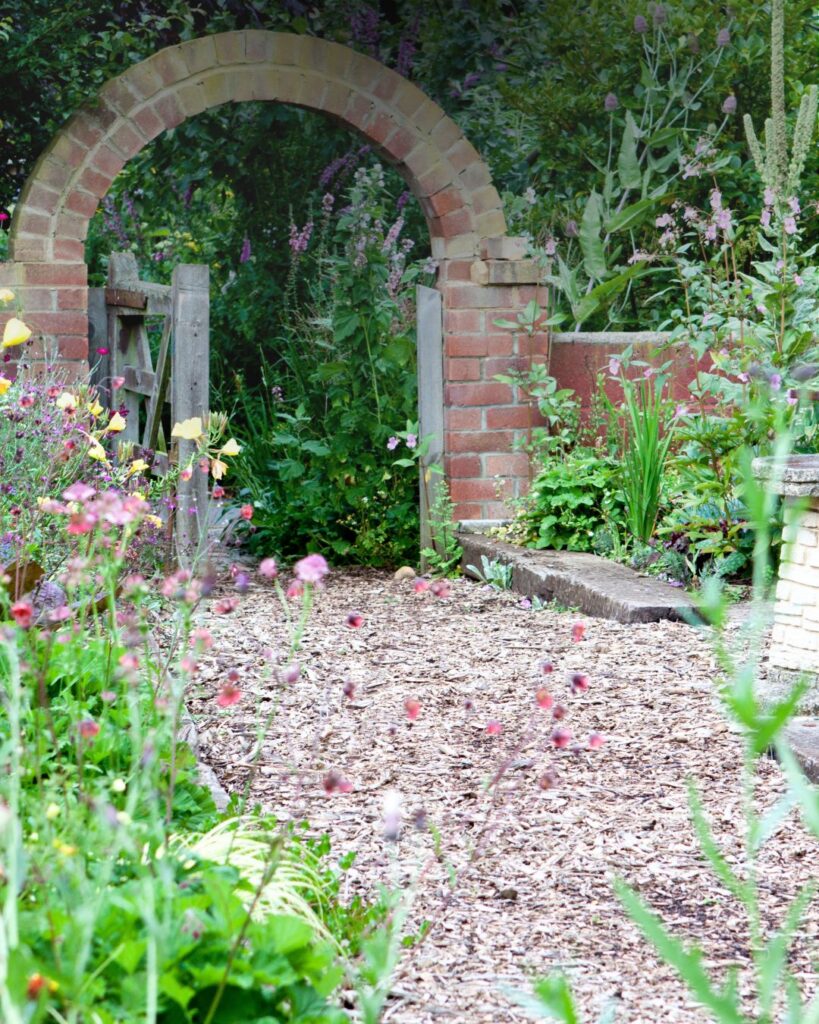
A brick arch is one of the clearest forms of threshold. You don’t simply pass through it; you cross it. The curved opening compresses the view, then releases it on the other side. Your eye moves forward. Your pace softens. The garden beyond feels separate from where you just were.
This sense of passage turns a single yard into two places: before and after. Even in a narrow space, that psychological division creates depth.
Defined Arrival: The Front Door
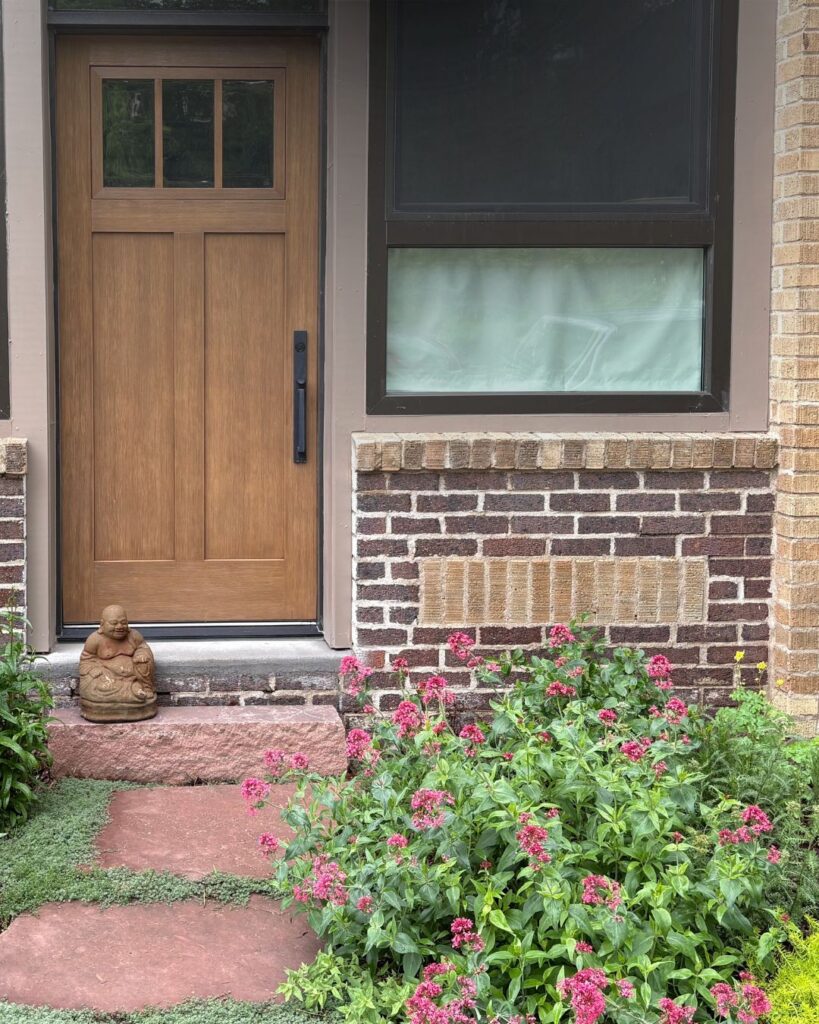
Design + Photo: Honeywood Garden Design
A front door is a threshold we intuitively understand. Steps rise. Materials change underfoot. The façade frames the moment of entry. All of it signals transition from public to private.
In gardens, similar cues create the same effect. A slight elevation, a change from gravel to stone, or a narrowing path before an opening can produce that feeling of arrival — even without walls.
Spatial Pause: The Passageway
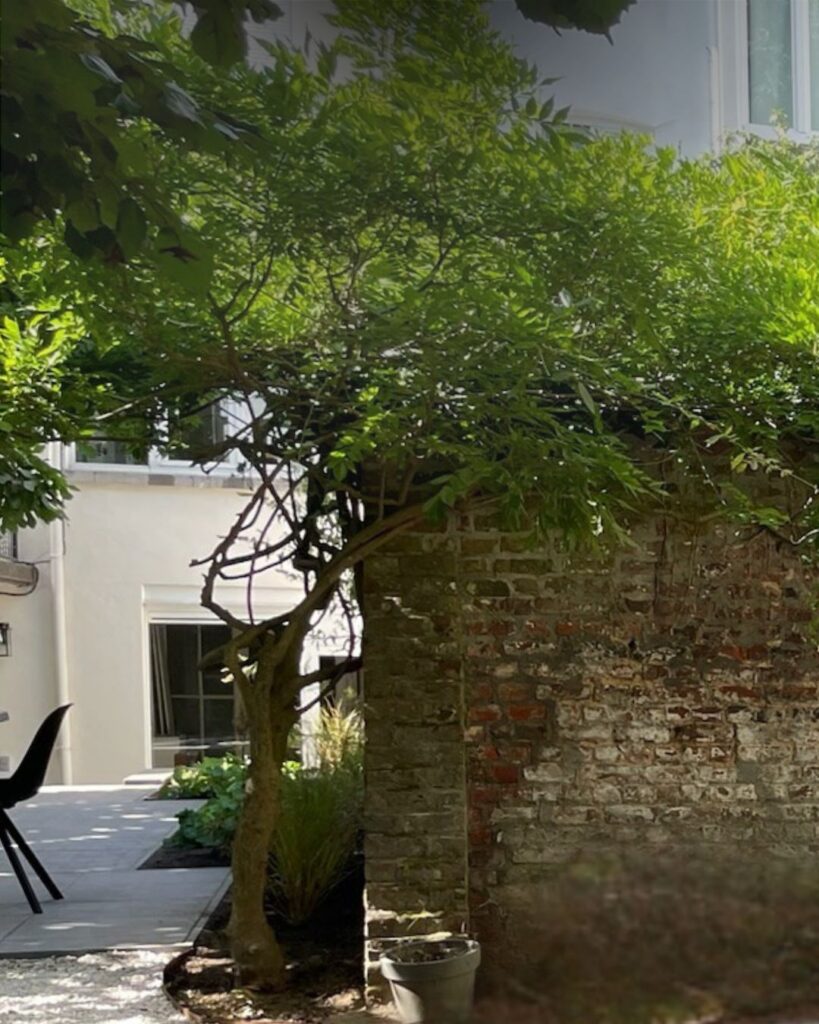
Design + Photo: Ingrid Leene Garden Design
Sometimes a threshold isn’t an object but an overhead gesture. A tree canopy leaning across a path and a brick column narrowing the passage form a quiet gateway. The space compresses. Light shifts. Movement becomes deliberate.
You’re not stopped — just gently slowed. That pause builds anticipation for what opens beyond.
Layered Welcome: The Planted Entry
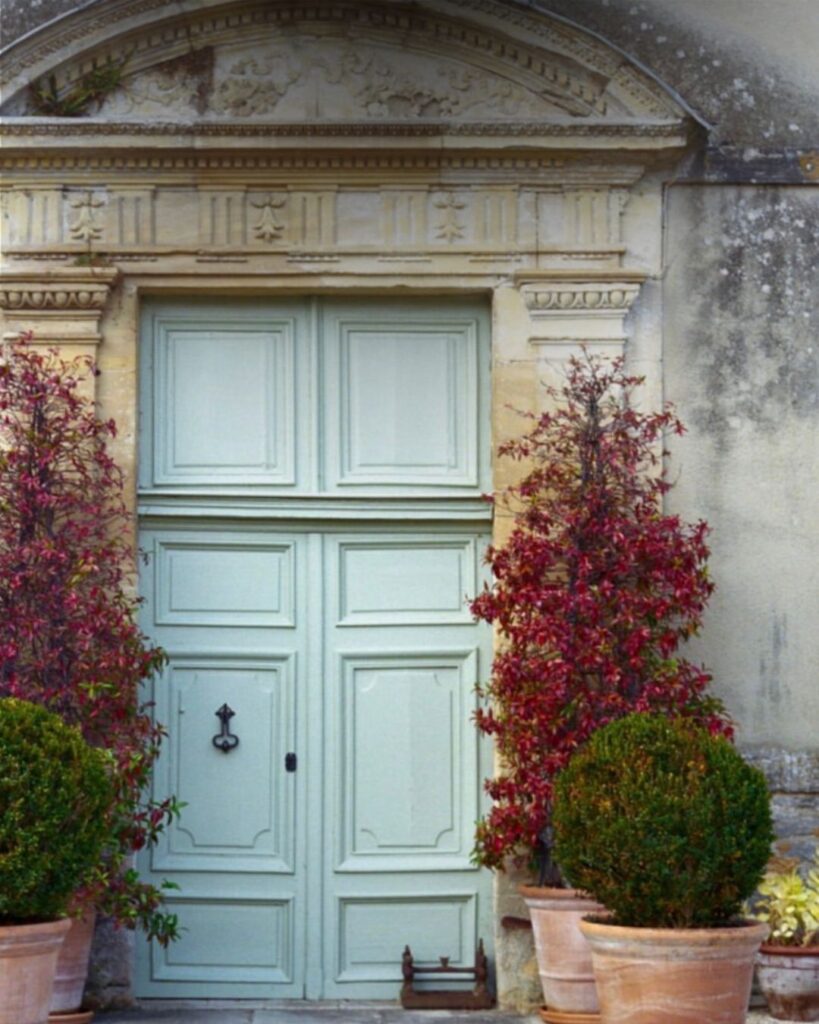
Photo: Dale Goffigon
A doorway flanked by trees and structured planting creates a living threshold. The vertical forms act like soft columns. Greenery replaces architecture. The entrance feels held, framed, and intentional.
Planting can function as structure. When used this way, it divides space without closing it off — ideal for small gardens where openness matters.
Why Thresholds Matter in Small Spaces
Thresholds create sequence.
Sequence creates rooms.
Rooms make a garden feel larger than its footprint.
Without transitions, a small yard is experienced all at once. With them, it unfolds gradually. The eye travels. The body moves in stages. Space gains dimension.
Thresholds don’t require more square footage.
They require intention.
And in small gardens, intention changes everything.
Thresholds are small gestures with outsized impact. They’re the quiet design decisions that shape how a place is felt, not just seen. That kind of noticing is at the heart of Alcove — looking closely at real gardens and naming the subtle moves that make them work. Because once you can see the decisions, you can begin to use them.
If you’re curious how these ideas show up in real gardens, the debut issue of Alcove is available free. It’s a gentle introduction to the way we study spaces — observing, naming, and translating design moves for everyday gardens. You can receive it instantly when you join the email list.


