


A small garden has very little patience for indecision.
There’s nowhere to hide a plant you’re unsure about. No corner to tuck away an idea that almost works. Every choice shows up immediately, like a guest who arrived early and is already rearranging the furniture.
And honestly? That’s kind of the point.
Small gardens don’t just ask you to design—they ask you to decide.
Editing Isn’t About Having Less
When people hear the word edit, they often imagine stripping everything back until a garden feels bare or serious. But editing in a small garden isn’t about deprivation—it’s about intention.
It’s choosing the rose you love most instead of five you feel lukewarm about.
It’s repeating a material so it feels calm instead of chaotic.
It’s realizing that one well-placed bench does more than three scattered ones ever could.
Editing isn’t taking beauty away. It’s giving beauty room to breathe.
Why Fewer Choices Feel Better
In a small space, your eye is constantly on the move. If everything is competing for attention, the garden can start to feel noisy—even if every element is lovely on its own.
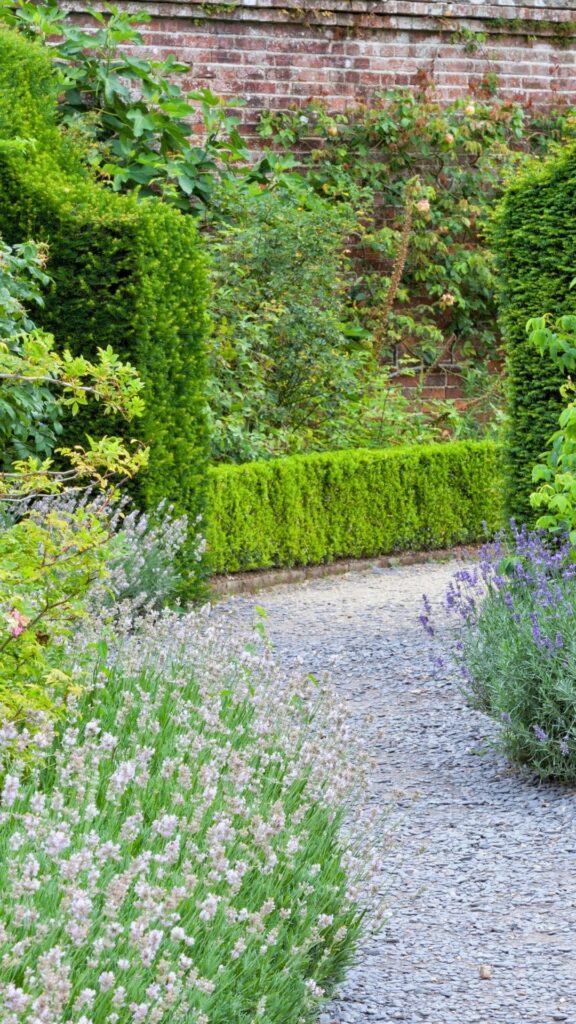
That’s why repetition feels so good in small gardens. A gravel path that reappears. A clipped hedge that quietly frames the scene. A limited palette that lets texture and light do the talking.
Think of it like a favorite outfit. The fewer pieces fighting for attention, the more polished the whole thing feels.
Learning What Not to Add
One of the hardest—and most valuable—lessons small gardens teach is knowing when to stop.
Not every trend needs an invitation.
Not every plant you admire belongs in your space.
Not every wall needs something hanging on it.
Sometimes the most confident move is leaving an area quiet. Letting a path stay simple. Allowing a planting to mature instead of constantly adjusting it. A little restraint can make the entire garden feel more settled, more grown-up.
Editing Is a Design Skill (Not a Personality Trait)
Some people think editing comes naturally—you either “have an eye” or you don’t. But small gardens prove otherwise.
Editing is learned. It comes from watching how light changes through the seasons, how plants fill in over time, how certain choices age gracefully while others demand constant attention.
Small spaces speed up that learning curve. They show you, very clearly, what’s working—and what isn’t.
When the Garden Starts to Feel Right
There’s a moment in a well-edited small garden when everything clicks. The space feels calm without being boring. Layered without being crowded. Finished, but not fussy.
That’s when you know the editing worked.
You didn’t add more.
You chose better.
And once you experience that feeling in a garden, you start to notice it everywhere—in interiors, in collections, even in how you spend your time.
The Quiet Confidence of a Small Garden
Small gardens don’t shout. They don’t need to.
They teach us that clarity is often more powerful than abundance, and that beauty doesn’t come from how much you include—but from how thoughtfully you choose.
Edit well, and even the smallest space can feel generous.


