

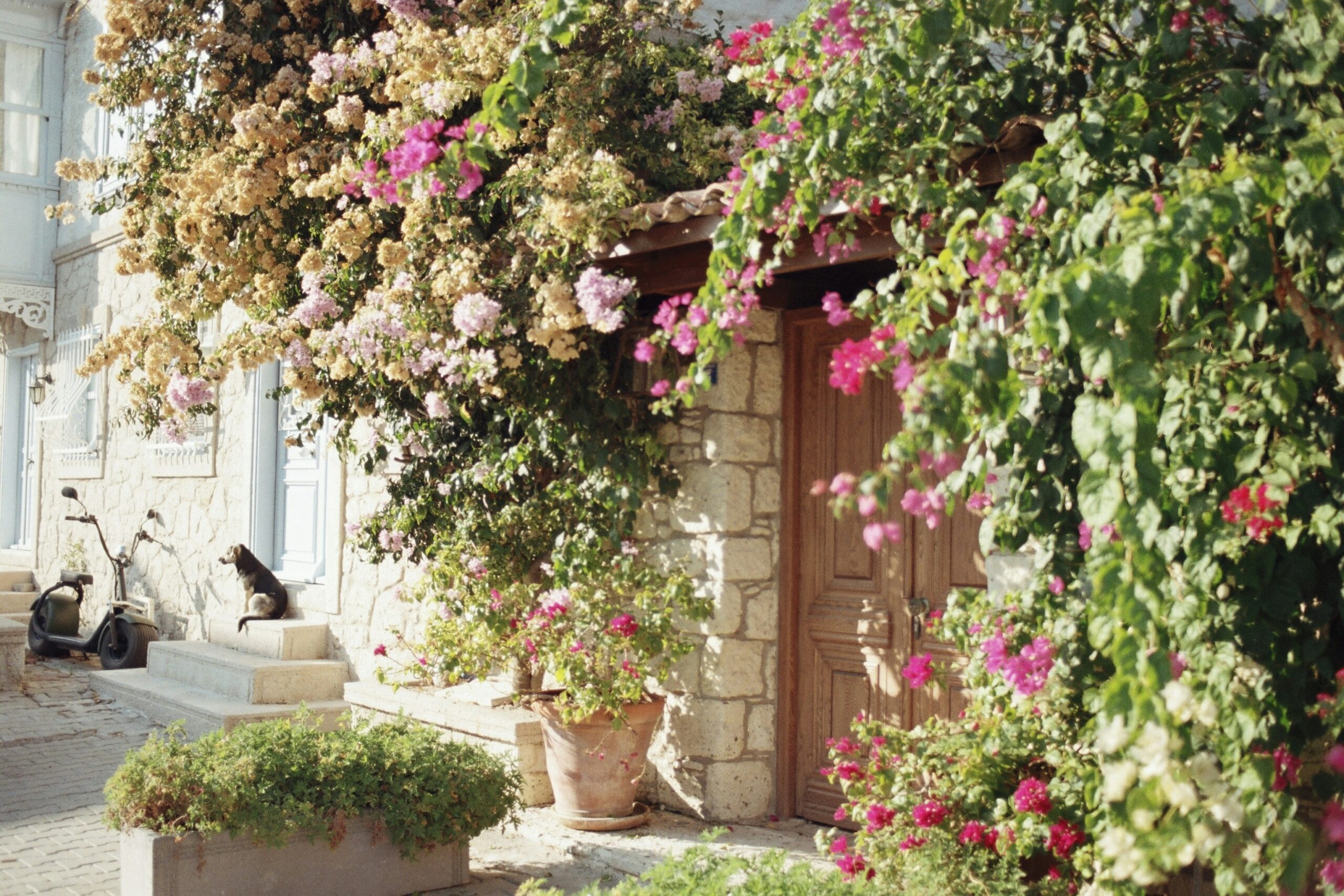
I wasn’t taking notes when I walked through Ibiza. I was just there — moving through streets I didn’t know, stopping when something caught my eye, taking the kind of photographs you take when you’re not trying to make anything. Random. Unplanned. Just what stopped me.
When I looked back through those images months later, trying to understand what I had actually been seeing, something kept appearing in photograph after photograph.
Simplicity. Not the expensive kind. Not the designed kind. The kind that comes from knowing exactly what you’re doing and doing nothing more.
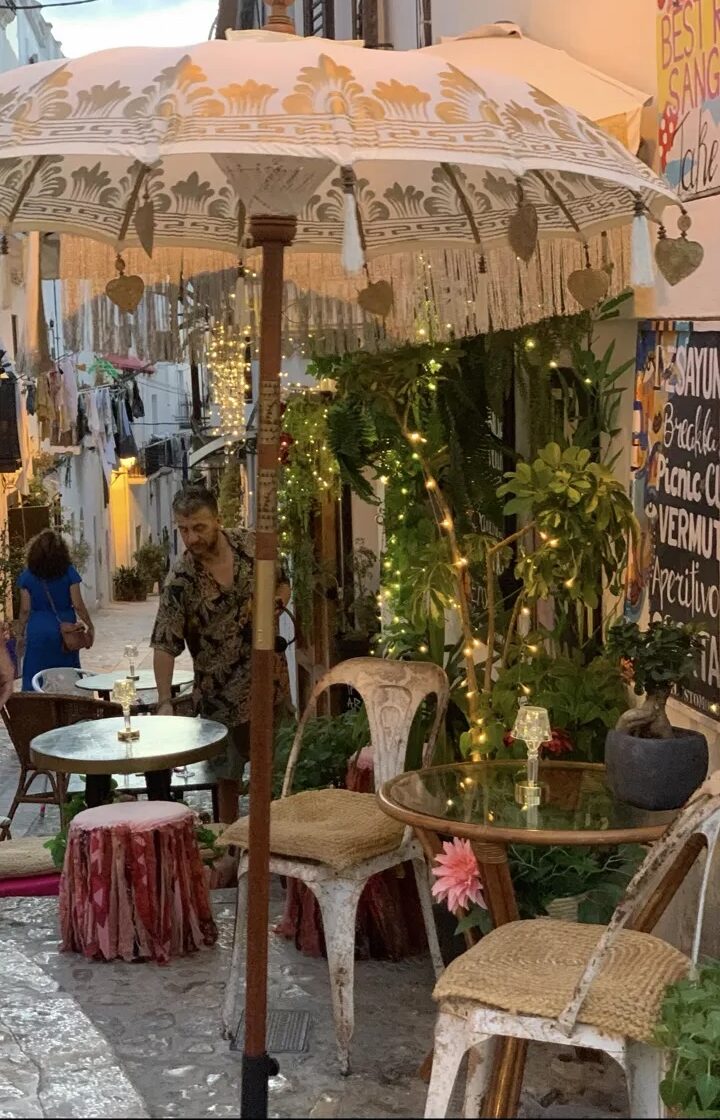
A small shop on a cobblestone street. A simple table. Two rusted chairs with rattan cushions. A white umbrella with gold designs and fringe. Twinkle lights woven into a vine that flanked both sides of the door. A lamp at the center of the table with more twinkle lights inside. A stool with red and pink velvet fabric draped over it. The floor was old — cobblestone or ancient stone, the kind that has been there long enough to stop drawing attention to itself. And just those simple, beautiful things added to that otherwise plain space brought it completely alive.
I kept looking at that photograph trying to name what it was doing. Why did it feel so settled? So complete? So restful?
This is what I found.
The Floor and the Walls Are on the Same Team
In almost every Mediterranean space that stopped me — from the elaborate stone terraces of the French Riviera to the smallest painted doorways of Ibiza — the ground and the walls existed in the same color family. Warm stone against warm plaster. Grey cobble against grey rendered wall. Terracotta tile against terracotta-toned stone.
This is not accidental. It is the foundation of Mediterranean garden design and it is the reason these spaces feel emotionally restful before a single plant is introduced.
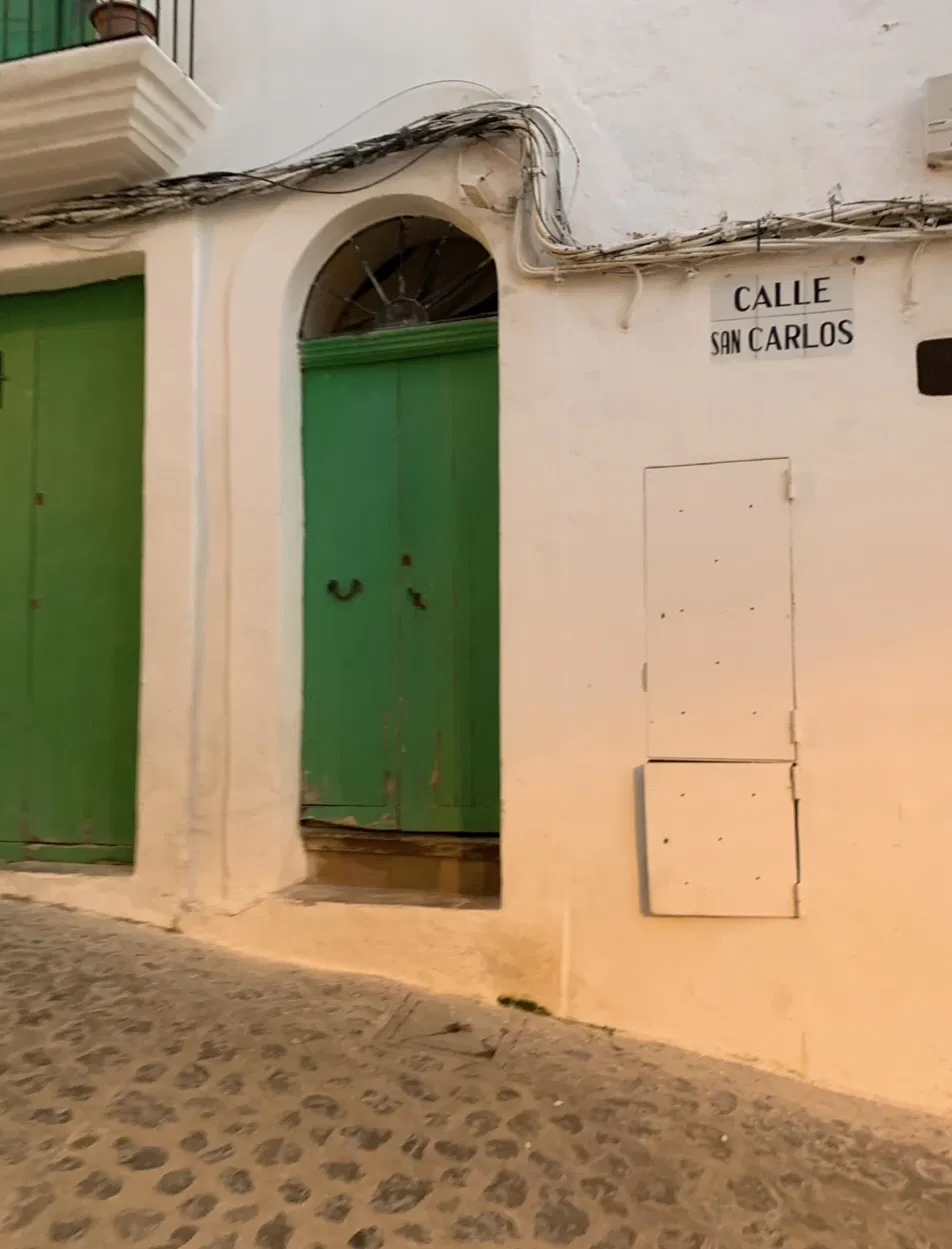
When the floor and walls are in the same color family the eye has nowhere to go. It settles. It doesn’t bounce between competing tones looking for a place to land. The space feels whole rather than assembled — as though it grew from the ground rather than being placed upon it.
This is what Mediterranean garden design does that most home gardens don’t. Most home gardens have a concrete patio, a wooden fence, a brick edge, and a gravel path — four different materials in four different colors existing in the same space without any relationship to each other. The eye moves constantly. The mind reads it as unresolved. The feeling is pleasant enough but never quite settled.
The Mediterranean solution is not expensive. It is edited.
One Thing Gets to Be the Star
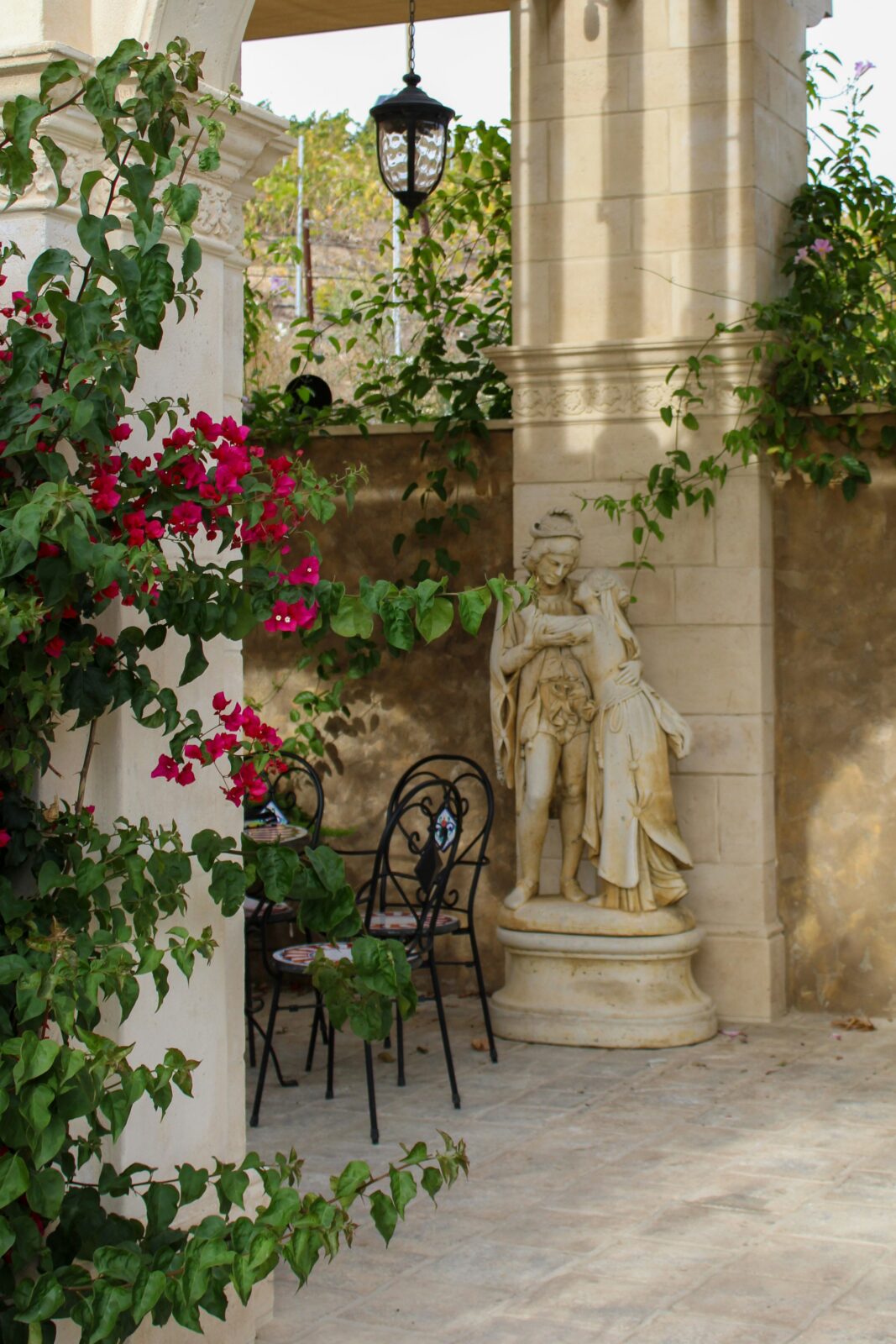
Photo by: Shawn Kim
Once the floor and walls are in the same color family — once everything has agreed to hold still — one element is allowed to sing.
In the Ibiza doorway it was the umbrella, in a simple planter against a stone wall it was the lavender and in the more elaborate gardens of the French Riviera it was a single climbing rose, or a terracotta urn, or a cypress tree standing alone against a pale wall.
The Japanese garden tradition understands this completely — a composition of quiet evergreens punctuated by one moment of color or texture or form. The Mediterranean tradition arrives at the same principle from a completely different cultural direction. Everywhere I looked in those photographs: a neutral ground, a neutral surround, and one thing that gets to matter.
This is why your lavender in its terracotta pot against your mixed-material patio doesn’t feel the way the lavender in Provence felt. It isn’t the lavender. It is everything around the lavender that isn’t holding still.
The Material Is Old — Or It Looks Like It Is
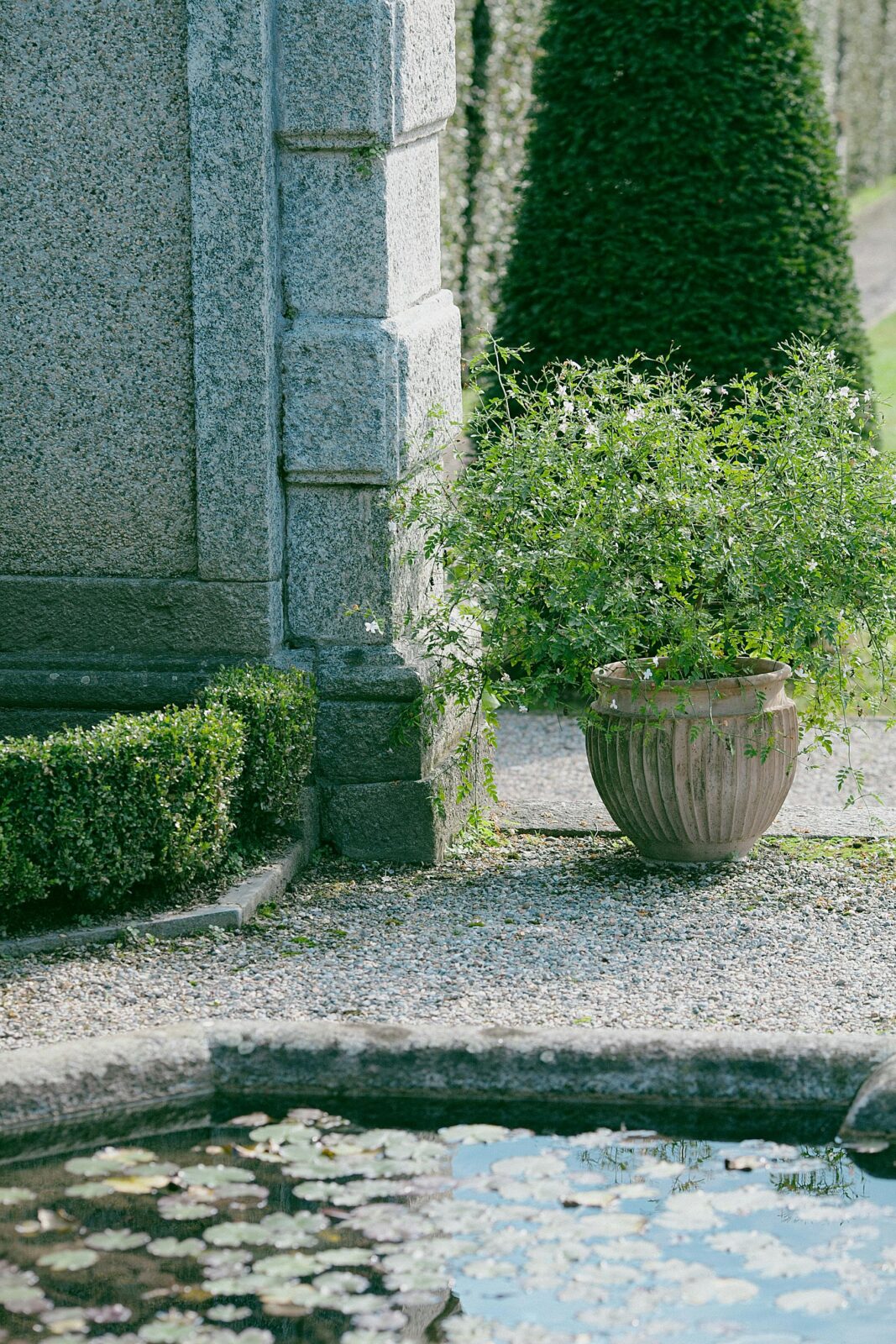
Photo by: Maria Orlova
The cobblestone in Ibiza was ancient. The stone walls of the French Riviera terraces had absorbed decades of light. The rendered plaster was worn at the edges. The iron was rusted. The terracotta had darkened with time and moisture.
Age is doing enormous emotional work in these spaces. It communicates that this place has been here before you arrived and will be here after you leave. That permanence — even the suggestion of it — creates a particular kind of calm. You are not in a space that is trying to impress you. The space just simply is.
You cannot manufacture age. But you can choose materials that age beautifully rather than materials that simply deteriorate. Iron rather than aluminum. Terracotta rather than resin. Limestone rather than concrete. Old cobblestone or reclaimed stone rather than uniform pavers. These materials begin their lives looking like they belong somewhere. Over time they deepen into it.
And there is something else worth knowing. In the cracks between old stone, in the crevices along steps, in the gaps where weeds insist on growing — the Mediterranean instinct is not to fight it but to redirect it. A handful of Erigeron seeds scattered into those cracks will grow into soft clouds of tiny white and lilac flowers that need almost no water and no maintenance. Weeds want to grow there anyway. Why not let something beautiful grow instead. That instinct — to find beauty in what is already there rather than imposing something new — is at the heart of how these spaces feel.
For those without a stone terrace or an ancient cobblestone street — for those with a balcony, a concrete floor, a wooden deck — the principle still applies. A planter made from aged stone or terracotta that aligns with the tone of your walls and floor. An outdoor rug in a warm neutral that connects the surfaces rather than competing with them, or in a vibrant Mediterranean color if you want that to be your one star. The floor doesn’t have to be ancient. It just has to agree with everything around it so that the plant — the one beautiful thing you’ve chosen — can do its work.
What This Means for Your Garden
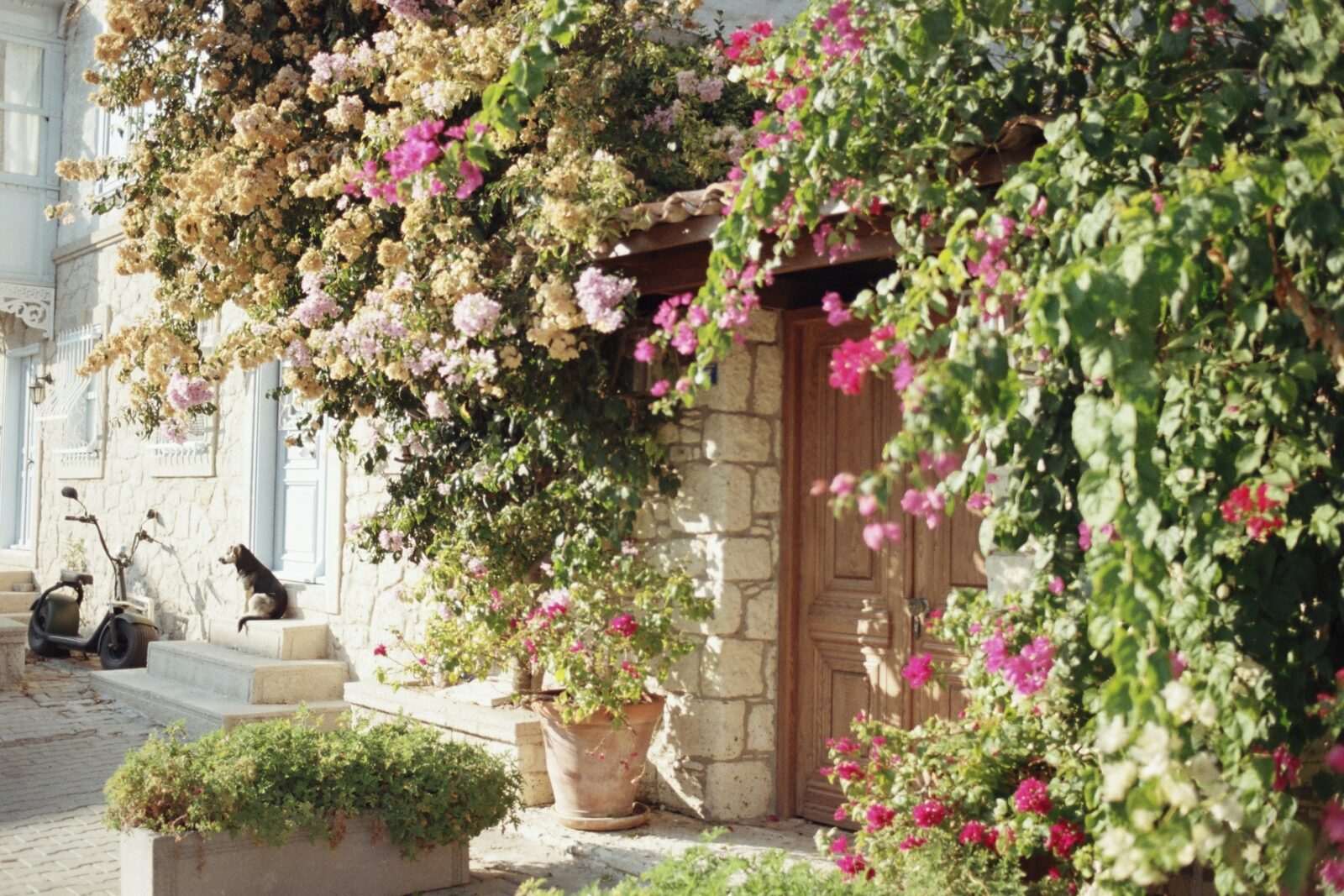
Photo by: Deniz Demirci
Mediterranean garden design feels emotionally restful not because of its climate or its history or its expensive stone terraces. It feels restful because of three decisions made before a single plant is chosen:
The ground and the walls agree on a color family and hold still.
One thing — one plant, one urn, one climbing vine — is given permission to be the focal point.
The materials chosen are ones that age into the space rather than fighting against it.
These are not complicated decisions. They do not require a large budget or a professional designer. They require looking at what you have — your patio surface, your fence or wall, your existing structure — and asking: are these things holding still, or are they competing?
If they are competing, that is what you change first. Not the plants.
The plants are almost always the last thing.
Not sure where to start? Begin with the free guide at alcovemagazine.com.


