


There’s a question I get asked constantly: where do you begin when you’re designing a garden from scratch?
People expect me to talk about color palettes or plant combinations. Maybe a hero plant that sets the tone. But the honest answer is simpler and less glamorous than that.
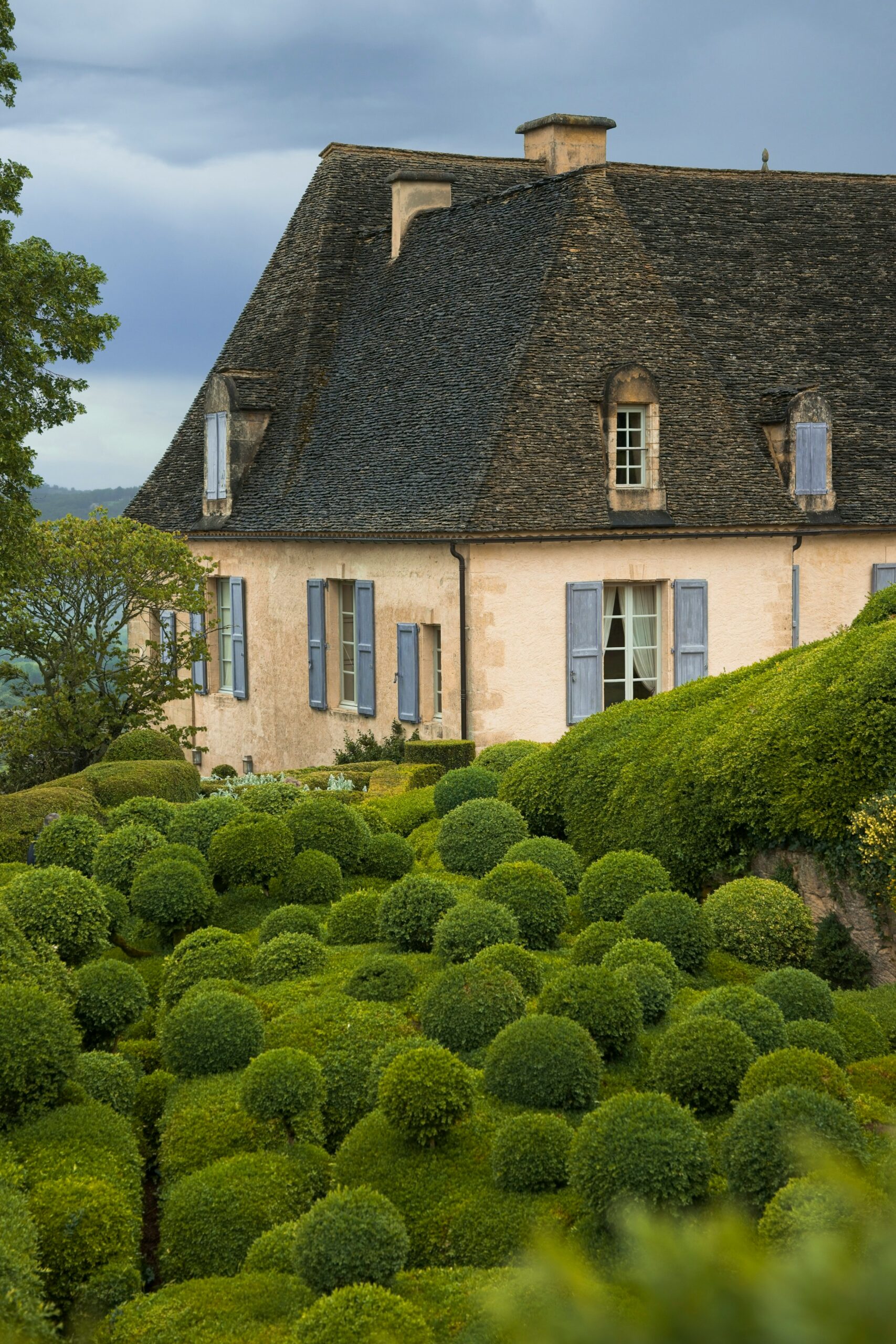
I start with boxwoods. Every time.
Not because they’re exciting. Because they’re reliable in a way that nothing else is — and in a garden, reliability is the foundation that makes everything else possible.
Here’s what I mean.
A garden without structure is a collection of plants. A garden with structure is a designed space. The difference between the two isn’t the flowers — it’s the bones underneath them. Boxwoods are those bones.
Think of them the way you’d think of the neutral pieces in a well-edited wardrobe. The cream linen shirt. The perfectly cut trousers. Everything else you own looks better because of them. Remove them and suddenly nothing quite works together the way it should.
That’s what boxwoods do in a garden. They give the eye somewhere to rest. They define edges. They create repetition — and repetition is what makes a small space feel intentional rather than busy.
What boxwoods actually give you
They hold their shape and color through every season — January frost, August heat, October rain. While everything around them blooms and fades, the boxwoods stay. That consistency is more valuable in a small garden than almost any flowering plant. If you’d like to dive deeper into how structure shapes a space through every season, explore our guide to winter garden structure.
They’re also remarkably versatile. A pair of clipped spheres flanking a front door reads as formal and composed. The same plant left to grow loosely at the edge of a border reads as relaxed and naturalistic. Same plant, completely different feeling — which is rare.
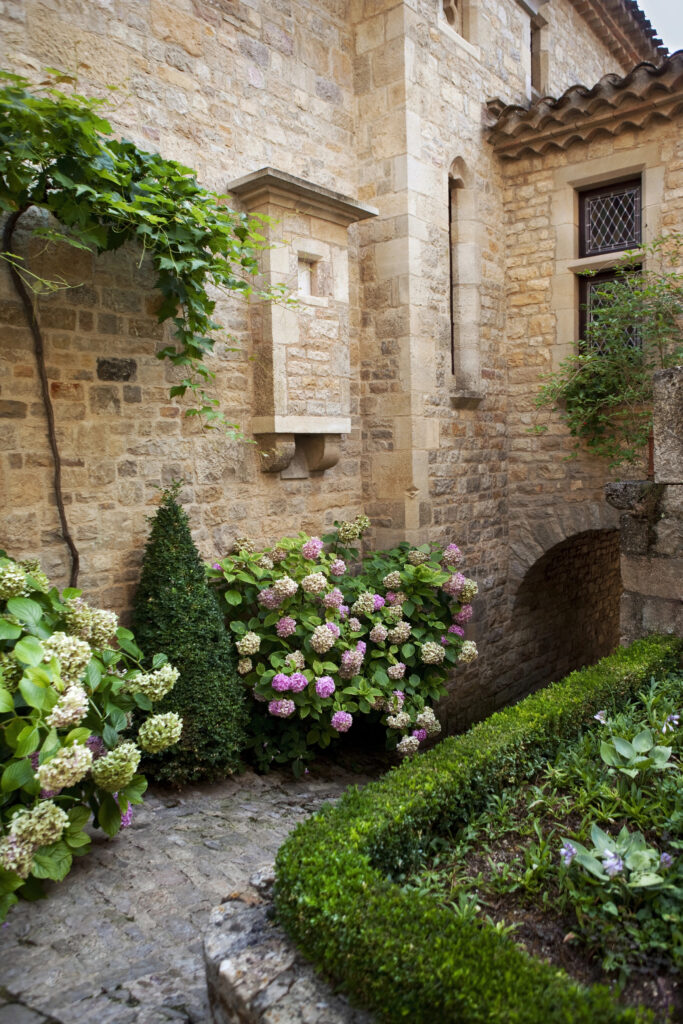
And they’re generous with other plants. Roses look more romantic against them. Tulips look more intentional. Hydrangeas look more considered. Boxwoods don’t compete — they amplify.
How to use them without it looking expected
The most common mistake is planting one boxwood — a single clipped ball in a pot, one hedge at the front of the border — and wondering why the garden still feels unresolved. One boxwood is a decoration. Three or five boxwoods is a design decision.
Repetition is the key. Use the same variety in multiple spots throughout the garden and the eye begins to connect the dots. The space starts to feel like it was planned, not assembled over several different trips to the garden center.
A few placements that work consistently:
Flanking an entrance — two matched forms on either side of a gate, a path, or a front door. The symmetry signals arrival without requiring anything elaborate.
As anchors at bed corners — a boxwood at each end of a long border gives the planting a beginning and an end. Everything between has a frame.
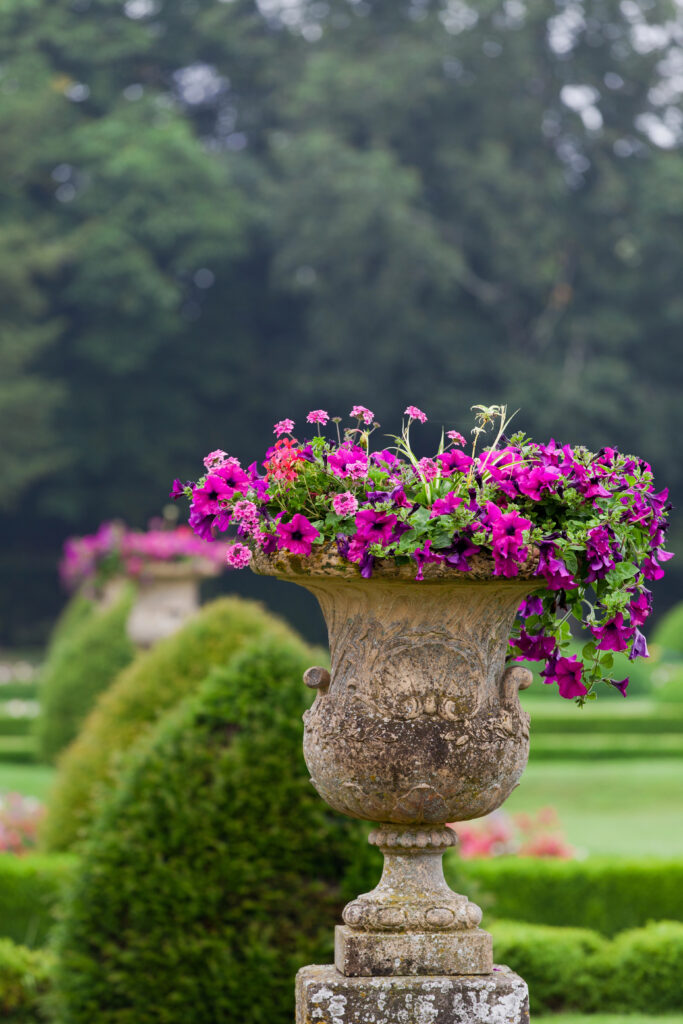
In containers — a single clipped boxwood in a beautiful pot is one of the most enduringly elegant things you can put on a terrace or patio. It will look right in February and in August.
As low hedging — even a six-inch hedge along a path changes how the space feels. The eye reads it as intentional. The path becomes a path rather than just a gap between plants.
The varieties worth knowing
Not all boxwoods behave the same way. In small spaces, variety selection matters.
Buxus sempervirens ‘Suffruticosa’ is the classic — slow-growing, small-leaved, the one you see in formal European gardens. It takes pruning beautifully and stays compact for years.
Buxus microphylla ‘Green Velvet’ is hardier and faster to establish — a better choice if you’re in a colder climate and want results within a season or two.
Buxus microphylla ‘Winter Gem’ holds its color unusually well through winter — that bright green rather than the bronzing some varieties develop in cold weather.
If boxwood blight or deer pressure is an issue in your area, the alternatives worth considering are dwarf yaupon holly, inkberry holly, or Japanese holly — all offer similar year-round structure with fewer vulnerabilities.
One last thing
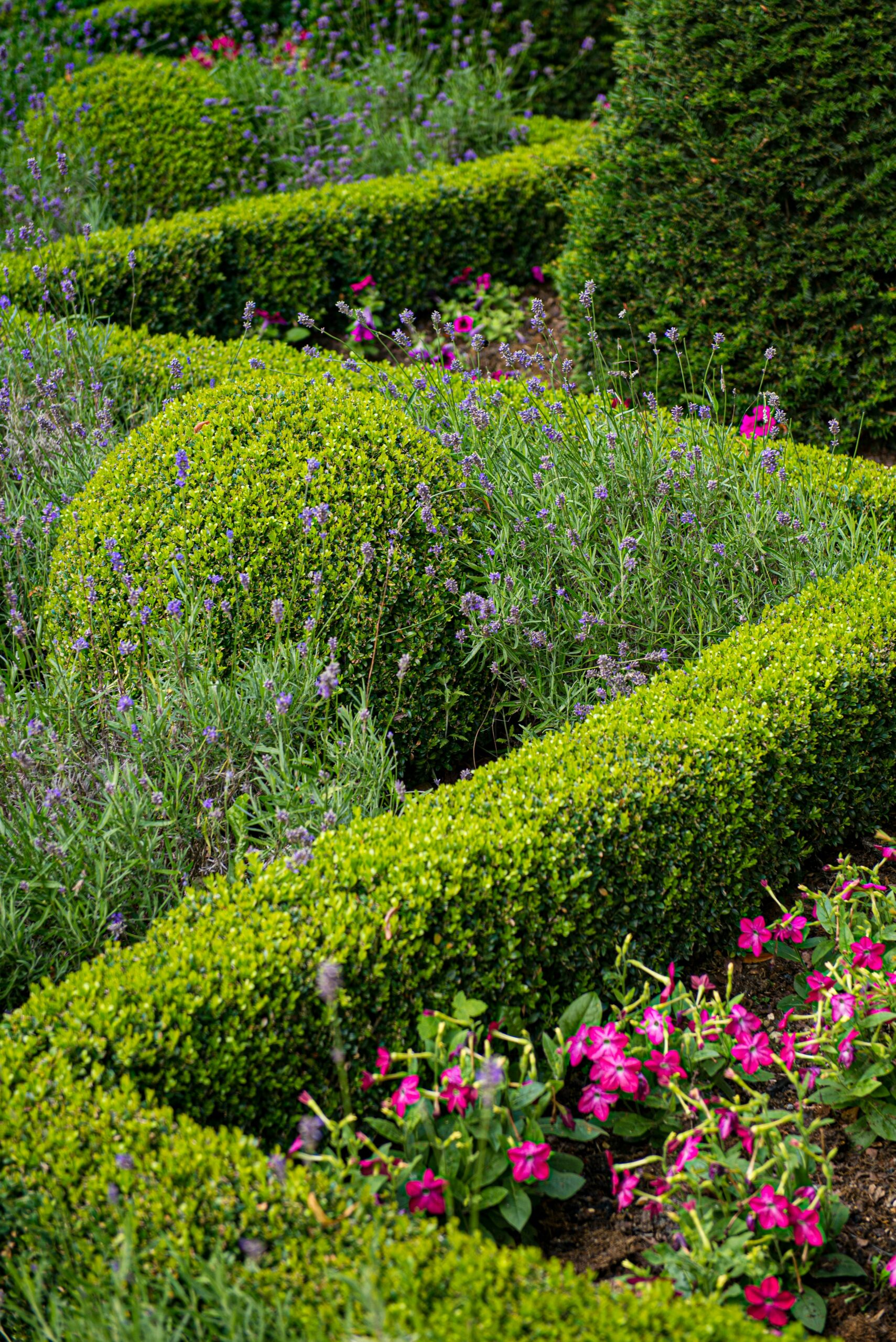
Photo: Sue Winston
When I stand back from a finished garden, the thing I look for first isn’t the flowers. It’s whether the bones are visible. Whether the eye knows where to go. Whether the space would still make sense in February when nothing is blooming.
The gardens that answer yes to all three almost always have boxwoods in them somewhere.
Start with structure. Let the color follow. The garden will look better for it in every season — especially the ones when nothing is in bloom.
Updated April 2026
There’s a question I get asked constantly: where do you begin when you’re designing a garden from scratch?
People expect me to talk about color palettes or plant combinations. Maybe a hero plant that sets the tone. But the honest answer is simpler and less glamorous than that.
I start with boxwoods. Every time.
Not because they’re exciting. Because they’re reliable in a way that nothing else is — and in a garden, reliability is the foundation that makes everything else possible.
Here’s what I mean.
A garden without structure is a collection of plants. A garden with structure is a designed space. The difference between the two isn’t the flowers — it’s the bones underneath them. Boxwoods are those bones.
Think of them the way you’d think of the neutral pieces in a well-edited wardrobe. The cream linen shirt. The perfectly cut trousers. Everything else you own looks better because of them. Remove them and suddenly nothing quite works together the way it should.
That’s what boxwoods do in a garden. They give the eye somewhere to rest. They define edges. They create repetition — and repetition is what makes a small space feel intentional rather than busy.
What boxwoods actually give you
They hold their shape and color through every season — January frost, August heat, October rain. While everything around them blooms and fades, the boxwoods stay. That consistency is more valuable in a small garden than almost any flowering plant. If you’d like to dive deeper into how structure shapes a space through every season, explore our guide to winter garden structure.
They’re also remarkably versatile. A pair of clipped spheres flanking a front door reads as formal and composed. The same plant left to grow loosely at the edge of a border reads as relaxed and naturalistic. Same plant, completely different feeling — which is rare.
And they’re generous with other plants. Roses look more romantic against them. Tulips look more intentional. Hydrangeas look more considered. Boxwoods don’t compete — they amplify.
How to use them without it looking expected
The most common mistake is planting one boxwood — a single clipped ball in a pot, one hedge at the front of the border — and wondering why the garden still feels unresolved. One boxwood is a decoration. Three or five boxwoods is a design decision.
Repetition is the key. Use the same variety in multiple spots throughout the garden and the eye begins to connect the dots. The space starts to feel like it was planned, not assembled over several different trips to the garden center.
A few placements that work consistently:
Flanking an entrance — two matched forms on either side of a gate, a path, or a front door. The symmetry signals arrival without requiring anything elaborate.
As anchors at bed corners — a boxwood at each end of a long border gives the planting a beginning and an end. Everything between has a frame.
In containers — a single clipped boxwood in a beautiful pot is one of the most enduringly elegant things you can put on a terrace or patio. It will look right in February and in August.
As low hedging — even a six-inch hedge along a path changes how the space feels. The eye reads it as intentional. The path becomes a path rather than just a gap between plants.
The varieties worth knowing
Not all boxwoods behave the same way. In small spaces, variety selection matters.
Buxus sempervirens ‘Suffruticosa’ is the classic — slow-growing, small-leaved, the one you see in formal European gardens. It takes pruning beautifully and stays compact for years.
Buxus microphylla ‘Green Velvet’ is hardier and faster to establish — a better choice if you’re in a colder climate and want results within a season or two.
Buxus microphylla ‘Winter Gem’ holds its color unusually well through winter — that bright green rather than the bronzing some varieties develop in cold weather.
If boxwood blight or deer pressure is an issue in your area, the alternatives worth considering are dwarf yaupon holly, inkberry holly, or Japanese holly — all offer similar year-round structure with fewer vulnerabilities.
One last thing
Photo: Sue Winston
When I stand back from a finished garden, the thing I look for first isn’t the flowers. It’s whether the bones are visible. Whether the eye knows where to go. Whether the space would still make sense in February when nothing is blooming.
The gardens that answer yes to all three almost always have boxwoods in them somewhere.
Start with structure. Let the color follow. The garden will look better for it in every season — especially the ones when nothing is in bloom.
Updated April 2026


