

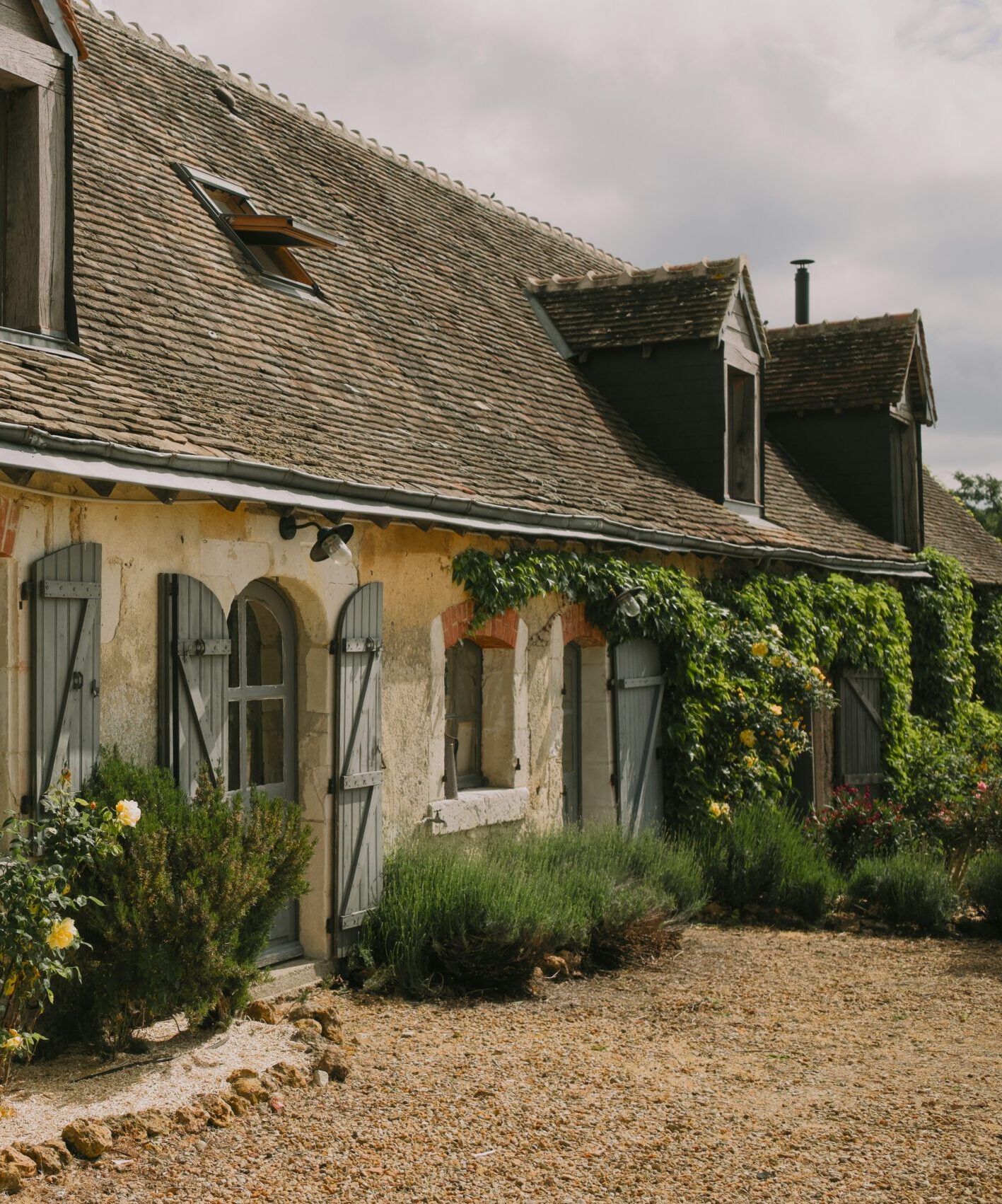
I turned fifty in the South of France in a beautiful french country garden.
It wasn’t a grand plan — it became one. Ajaccio, Marseille, Aix-en-Provence. Ten days of walking slowly through streets I didn’t know, stopping whenever something caught my eye, eating lunch wherever looked right. I was there to celebrate, but I ended up studying.
I couldn’t stop noticing the gardens.
Not the famous ones — the grand estates and formal parterres you find in design books. The ordinary ones. A terrace in a Corsican hillside village, terracotta tiles worn smooth by decades of foot traffic, a handful of pots overflowing with color against a backdrop of stone mountains. An iron gate, its green paint peeling back to rust, opening onto a small courtyard where white roses climbed a wall that looked like it had been there for three hundred years. Red geraniums in a window box against yellow stucco, so simple it mesmerized me completely.
I took photographs of all of it. Not because I didn’t trust my memory. Because I wanted to understand why it felt the way it did.
I’m a landscape designer. I’ve been designing outdoor spaces for over a decade and obsessing over gardens for most of my life. And standing in those streets, I was doing what I always do — looking past the surface to find the principle underneath.
Here is what I found.

The feeling wasn’t coming from the plants
This is the part that surprises most people, and it’s the reason so many attempts to recreate a French garden don’t quite land. You come home from Provence, you buy lavender and white roses and a clipped boxwood, and something is still missing. The garden looks right in pieces but doesn’t feel right as a whole.
What you experienced in France wasn’t a plant palette. It was a place. And places are made of surfaces, age, enclosure, and the relationship between inside and outside — long before a single plant is chosen.
Let me show you what I mean.
The surfaces came first
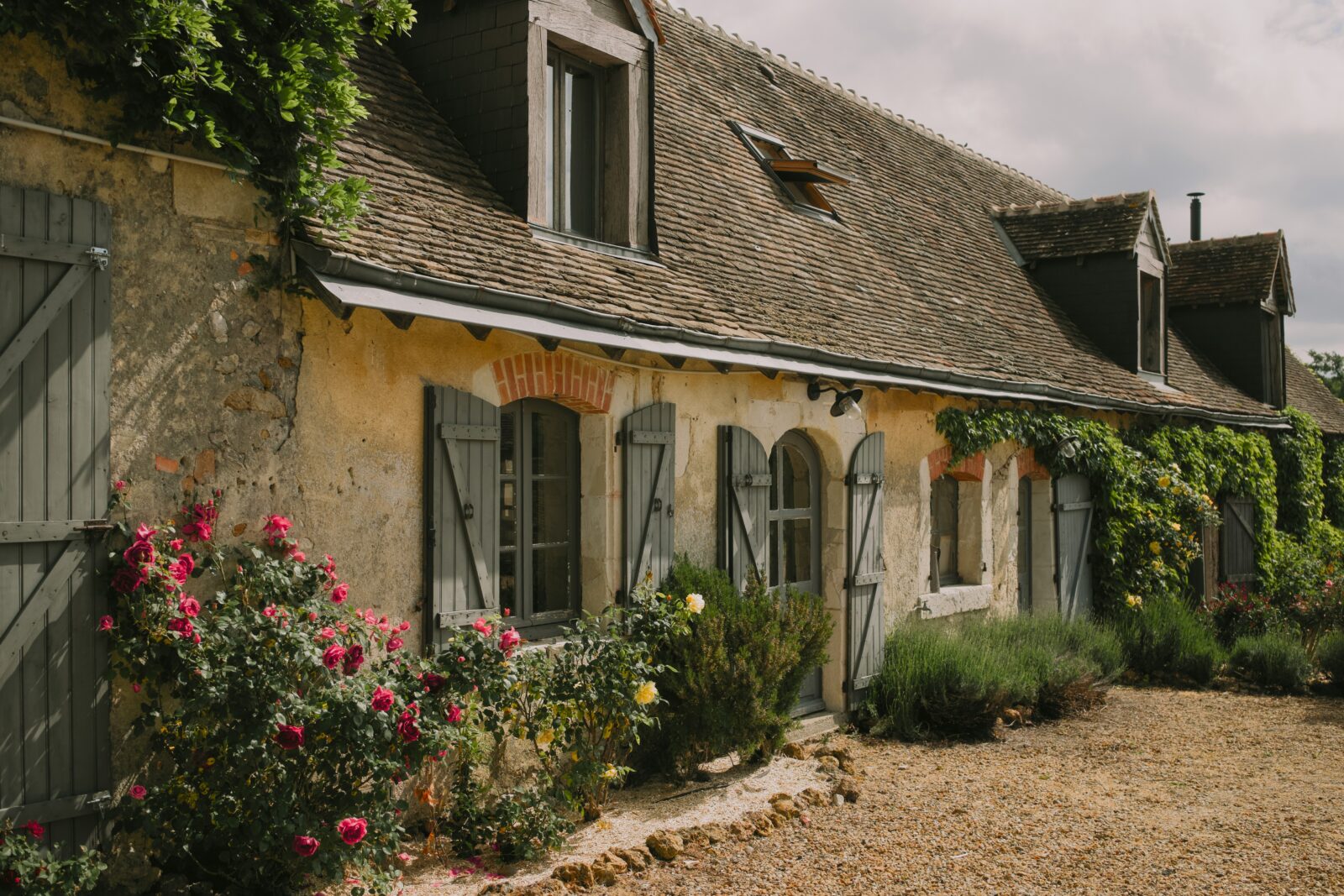
Photo by: Erwan Hesry
Every garden that caught my eye in the South of France had a ground plane that looked like it belonged to the earth. Stone steps worn at the center. Terracotta tile that had absorbed fifty summers of heat. Gravel the color of the local limestone. These materials weren’t chosen from a catalog — they were quarried locally, laid by hand, and left to age. That’s what gave them their particular quality of being somewhere.
You can recreate this. Not with the same stones — your local quarry will have different colors and textures — but with the same principle. Natural materials, in the palette of your region, laid with restraint. No stamped concrete. No perfectly uniform pavers. The ground plane should look like it has a history, even if you just laid it last season.
The age was doing the work
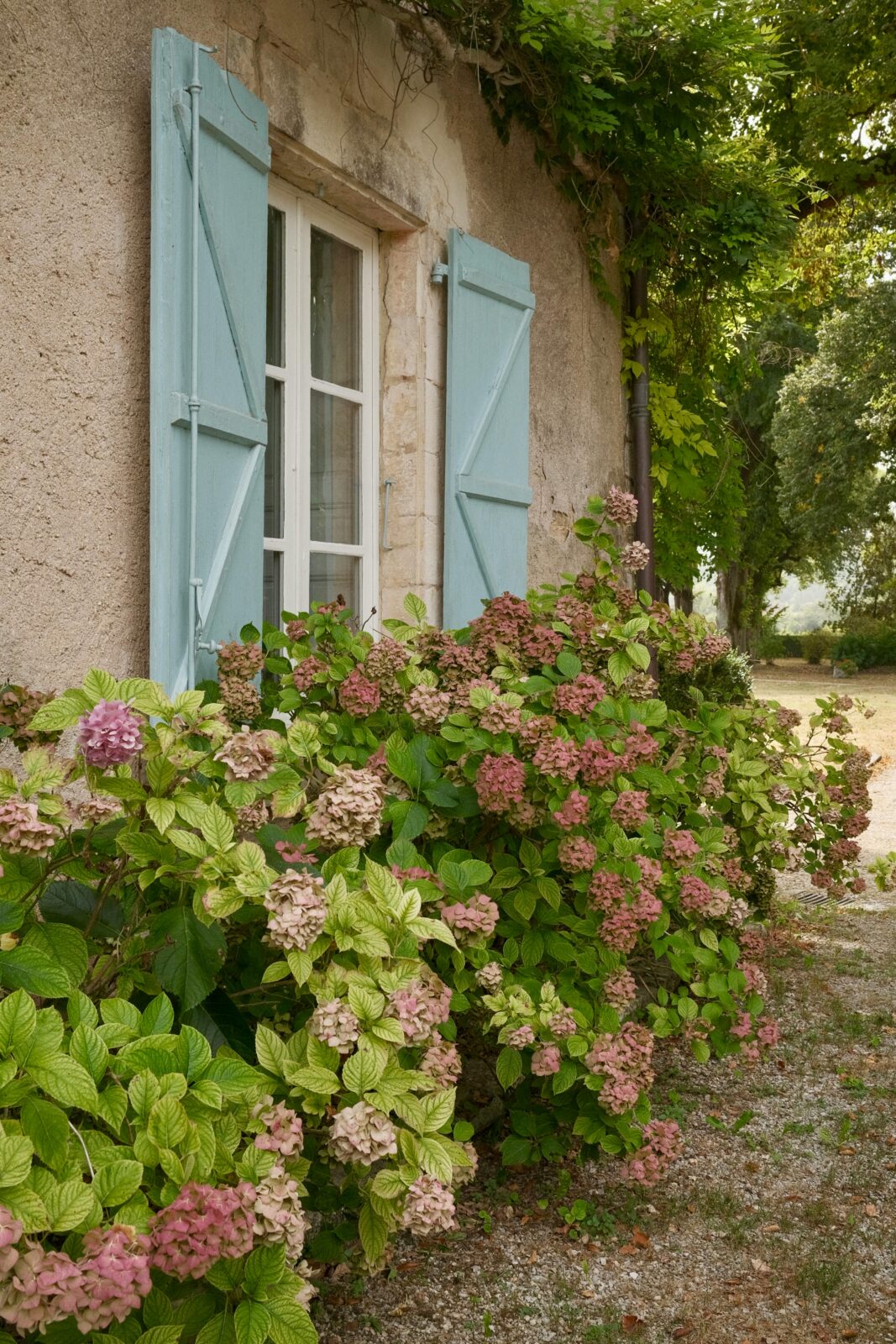
Photo by: Adrien Daurenjou
That peeling green gate in Corsica wasn’t beautiful despite its age. It was beautiful because of it. The rust showing through the paint, the slight lean of the post, the worn granite steps leading up to it — these were the details that made the space feel inhabited and real rather than designed and finished.
You cannot manufacture age. But you can choose materials that age beautifully — iron rather than aluminum, terracotta rather than resin, limestone rather than concrete. And you can resist the impulse to keep everything looking new. A little moss on a stone step. A gate that doesn’t quite close perfectly. These are not failures of maintenance. They are the beginning of character.
The enclosure was everything
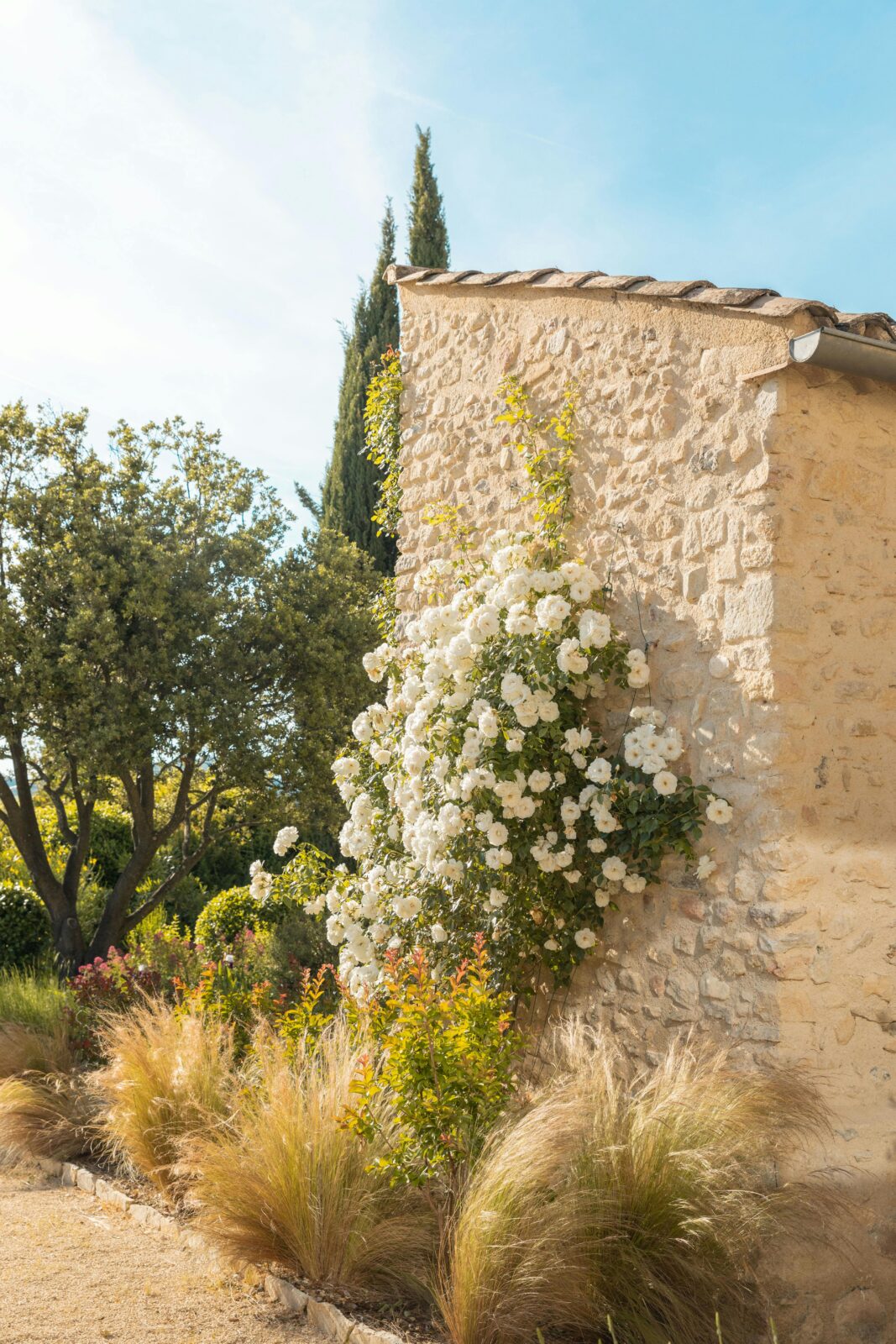
Photo by: Ryan Klaus
The gardens I loved most in the South of France were not open to the street. They were contained — by walls, by fencing, by hedges, by the buildings themselves. You glimpsed them through a gate, or over a wall, or through a window from inside a café. The enclosure wasn’t keeping you out so much as it was keeping something in — a quality of atmosphere that depended on being protected from the ordinary world just outside.
In your own garden, enclosure is the single most transformative move you can make. A low stone wall. An iron fence with a simple gate. A hedge of yew or hornbeam along one edge. You don’t need to enclose the entire space — even one enclosed side changes the feeling of what’s inside it. The eye settles. The space becomes somewhere rather than anywhere.
The plants were restrained and repeated
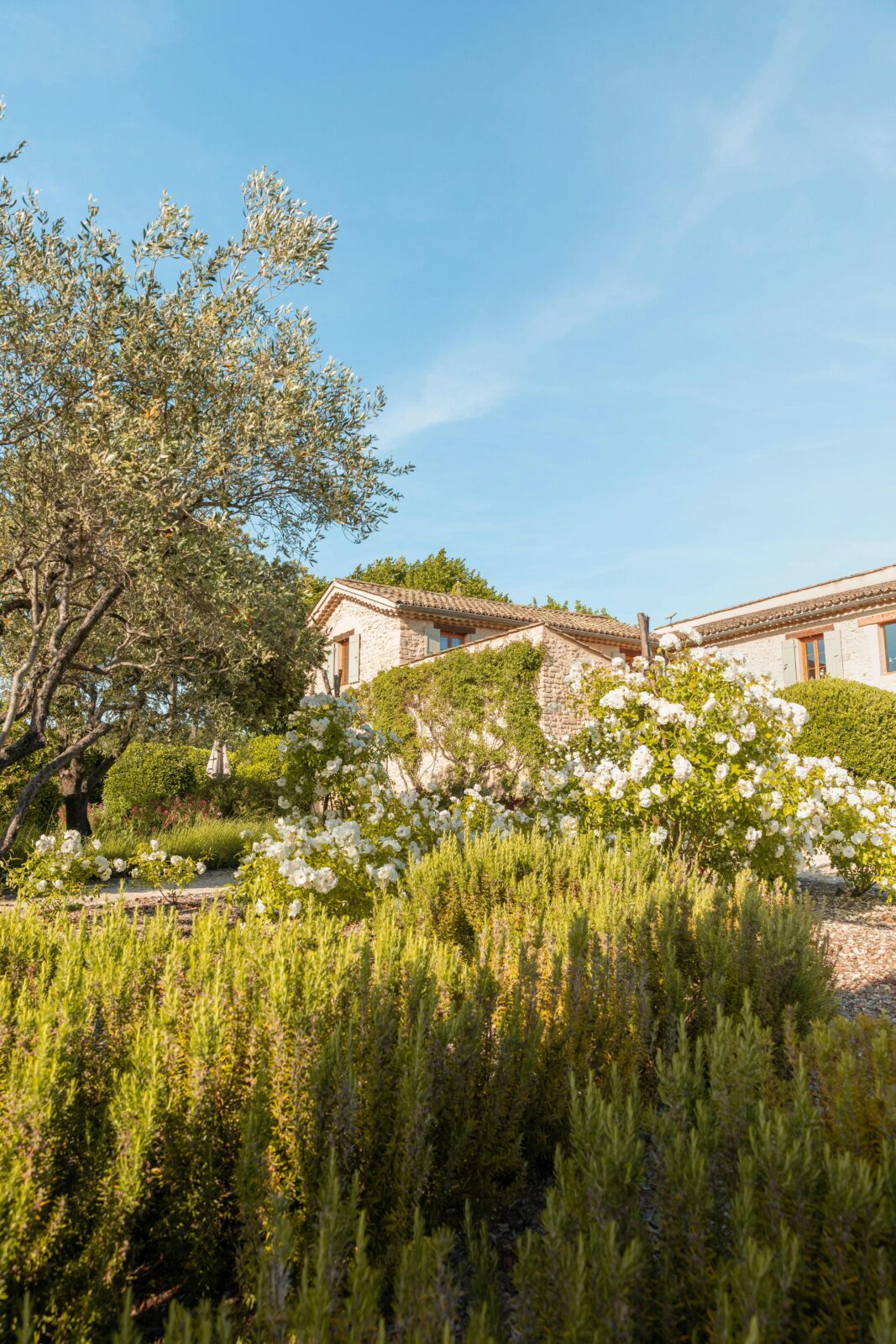
Photo by: Ryan Klaus
When I looked closely at the gardens that moved me most, the plant palette was remarkably simple. White roses, repeated. Red geraniums, repeated. Lavender in mass, not dotted. One clipped shrub as punctuation, not a collection of five different varieties. The restraint was what made each plant matter. Nothing competed. Everything belonged.
This is perhaps the hardest thing to do in a garden, because the temptation is always to add more. One more color, one more variety, one more thing that caught your eye at the nursery. French gardens resist this. They choose a handful of plants and commit to them completely. The feeling of abundance comes not from variety but from volume — many of the same thing, planted closely, allowed to grow into each other.
The connection between inside and outside was assumed
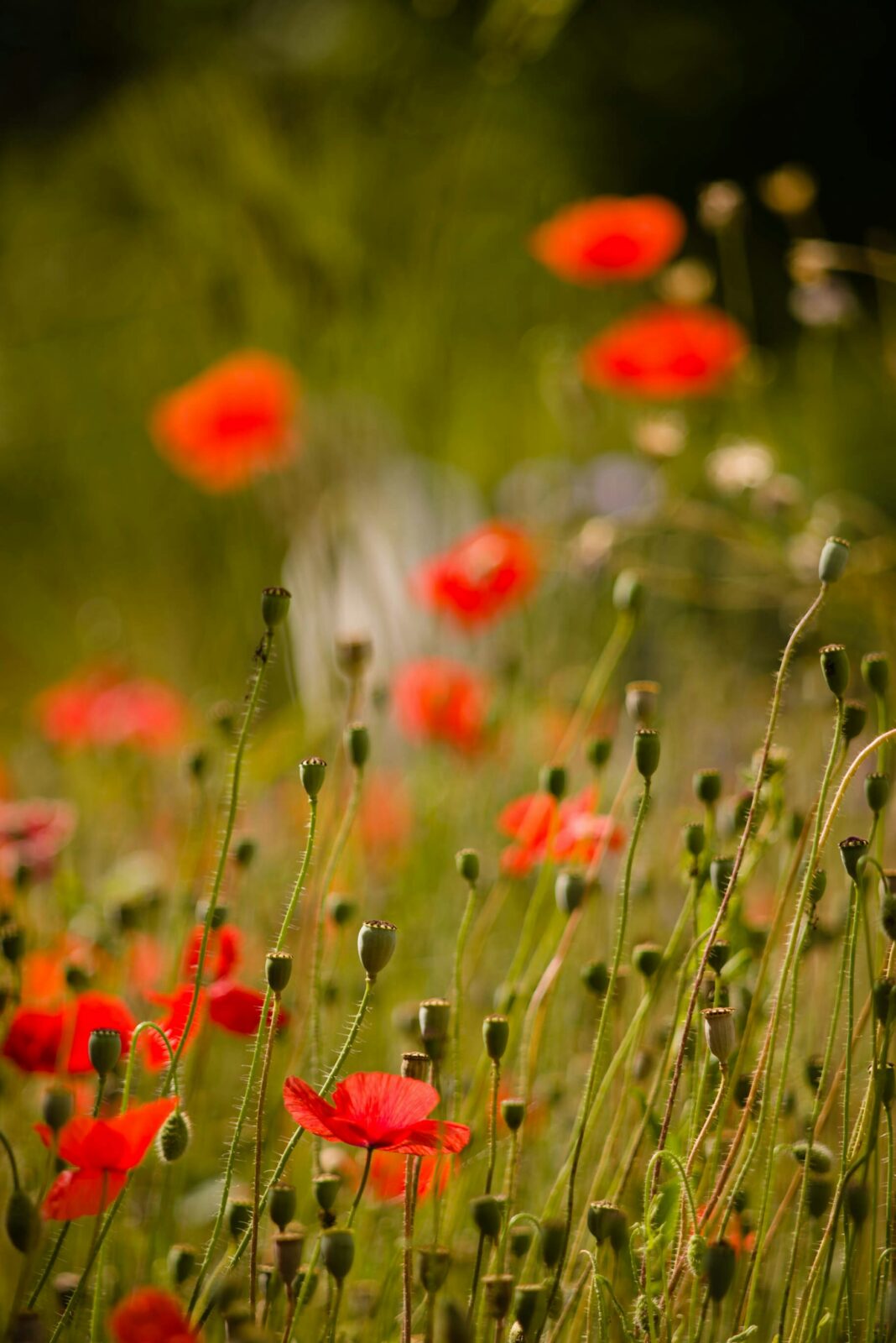
Photo by: Yves Destours
In every home I glimpsed through an open door or window in the South of France, the garden was not separate from daily life. It was the continuation of it. A table and two chairs on a terrace — not a full outdoor dining set, not cushioned loungers, just a table and two chairs — positioned where the morning light arrived. A window box at exactly the height where you’d see it while standing at the sink. The garden was designed to be lived with, not visited.
Ask yourself where you see your garden most often. From which window. On which path. At which moment of the day. Design for that view first. Everything else follows.
The South of France impressed me not because it was grand or designed or expensive. It impressed me because it was honest. Natural materials, simple plants, age allowed to accumulate, enclosure that created intimacy. A garden that knew what it was.
You don’t need a hillside in Corsica or a three-hundred-year-old wall. You need to understand what created the feeling — and then find the version of it that works where you live.
That’s what Alcove is here to help you do.
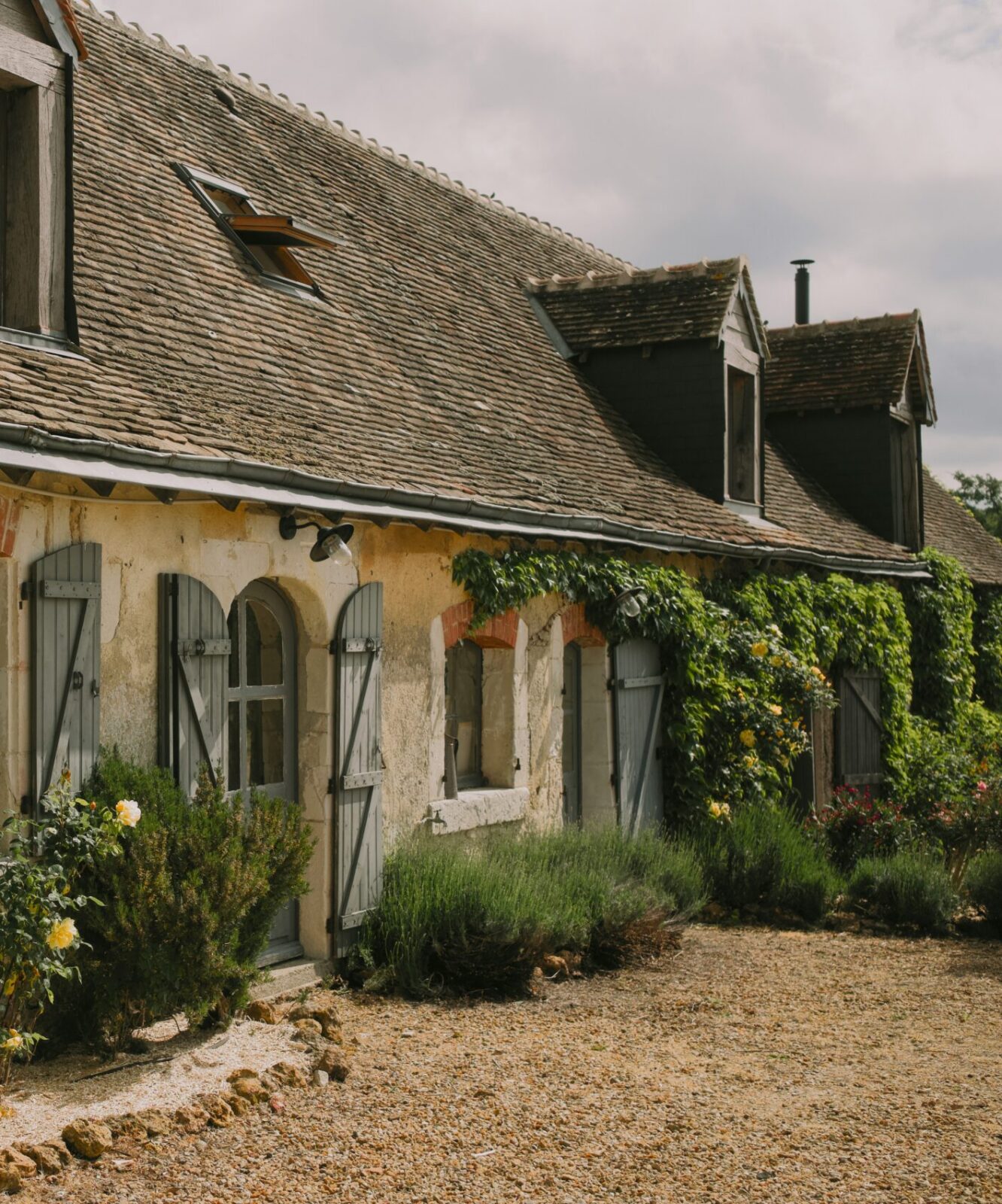
Photo by: Erwan Hersy
If you’re not sure where to start, the 5-Day Garden Journey walks you through the questions a designer asks before anything gets planted. It’s free, and it begins with who you are rather than what you buy. Start here.


