


Why every garden seating area should be designed around the life you want to live, not just the view
When my husband and I have visitors, they almost always choose the same garden seating area: the two chairs that face the garden.
Most of our entertaining happens outside on our covered deck when the weather is nice. It is private, cool, and protected from the sun. But I think the view is what makes people settle in. The seating is positioned so that guests can look out over the garden rather than back toward the house. They can see the plants, watch the birds, notice what is flowering, and follow whatever small drama the squirrels have created beneath the peach tree.
The chairs give them somewhere comfortable to sit, but more importantly, they give them a reason to stay.
It is possible to create a beautiful garden without creating any real place for a person within it. The beds may be full, the plants may be thriving, and the photographs may be lovely, yet the garden still leaves you standing at the edge of it.
You can admire it, maintain it, or walk through it.
But you cannot quite make yourself at home in it.
Begin with the life you imagine
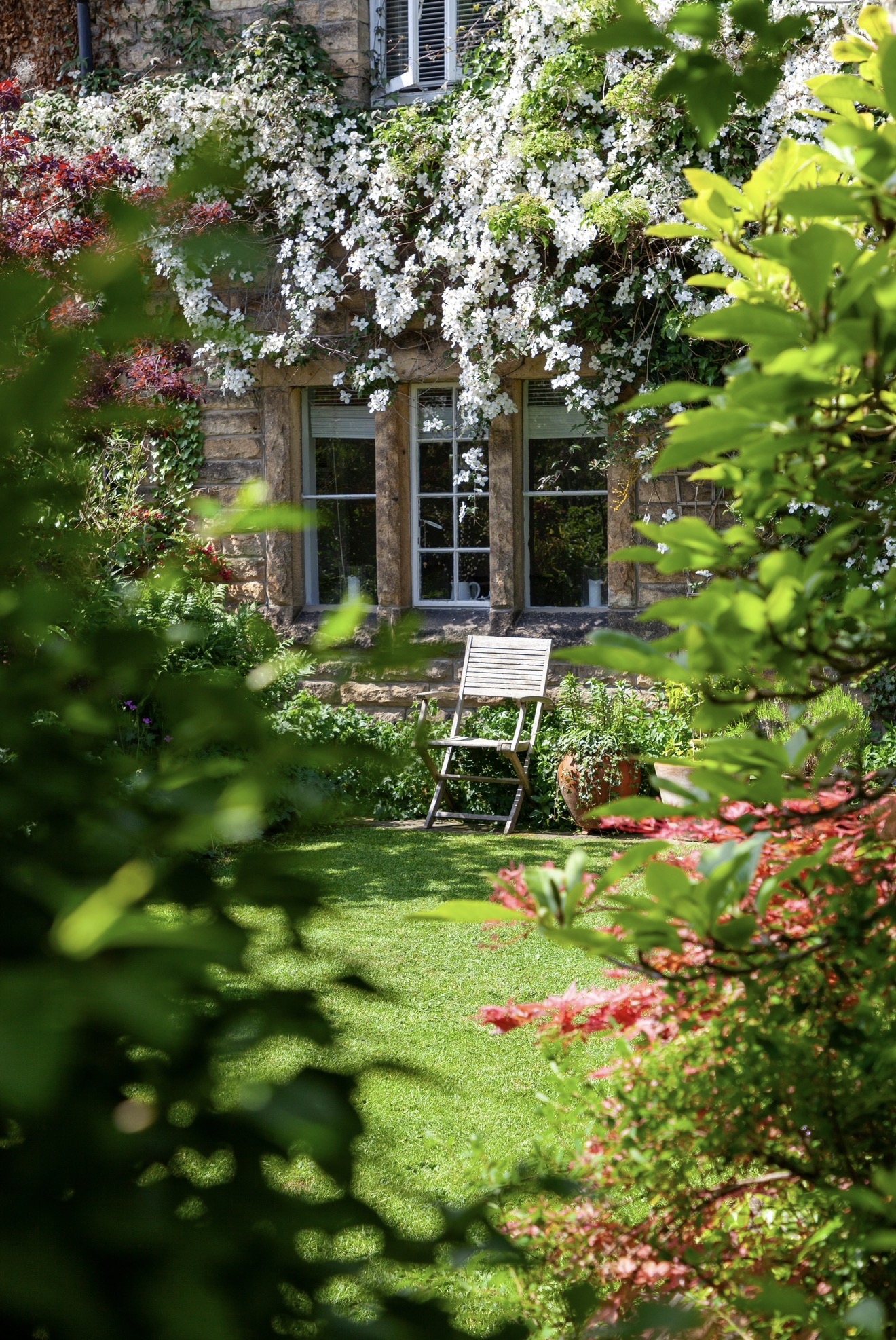
Darren Richardson
Before choosing the furniture, ask yourself what you want to do in the garden.
Do you want somewhere to drink coffee before the rest of the house wakes up? A quiet chair for reading? A place to talk with your spouse at the end of the day? A table for long dinners? Somewhere to watch your children play? A comfortable corner for a cocktail with a friend?
The answer matters because a garden designed for looking is not necessarily designed for living.
A bench placed at the end of a path may create a lovely focal point, but it will not be used often if it sits in harsh afternoon sun. A delicate bistro set may suit the scale of a small terrace, but it may not suit a family with rambunctious children. A large dining table may seem like the obvious choice for entertaining, but it could overwhelm the space if most evenings are spent by only one or two people.
Begin with the life you want to live there. Then create the place that supports it.
Give the seat a reason to exist
A chair should not be placed somewhere simply because there is room for it.
Consider what you will see when you sit down.
Perhaps the garden already offers a beautiful view: a flowering border, an old tree, a patch of lawn where the children play, or the part of the sky that changes color in the evening. Positioning a seat toward that view can make the garden feel more expansive and give your attention somewhere pleasant to rest.
But not every outdoor space begins with something beautiful to look at.
My sister lives in an apartment with a small outdoor area reached through a single door. The view is mostly a half-height concrete wall with a fence above it. There are no established plantings and very little about the space that feels inviting.
I would not tell her to wait until she could create a complete garden. I would begin by changing the experience of the space.
Because there is no existing garden to face, I would create a view. I might begin with one comfortable chair and a small table, soften the concrete underfoot with an outdoor rug, and place one generous plant or small tree where it could become the focal point. A little light in the evening could make even that unfinished space feel intentional.
It would not be a finished garden. It would be one beautiful place to sit.
That may be enough to make her begin using the space—and using it would likely reveal what should come next.
Comfort is part of the design
It is easy to think of comfort as something added later through cushions and pillows. But true comfort begins much earlier.
It includes shade at the hour you are most likely to use the space, protection from wind, privacy from neighbors, and a sense that you are not sitting in the middle of an exposed area. And being able to reach the seat easily from the house and having somewhere nearby to set down a cup.
Our deck has always been covered, but the late-afternoon sun once reached beneath the roof and made the space almost unbearable from about three o’clock until early evening. We planted a tree where it could eventually interrupt that western light.
That one decision changed how we use the deck.
The furniture did not move. The view did not change dramatically. But the hours in which the space felt comfortable expanded, and we began spending much more time there.
This is why designing around human presence matters. A garden feature can be beautiful and still fail if it does not account for when and how people will actually experience it.
Let the garden meet real life
A beautiful garden also needs to withstand the life happening within it.
That might mean sturdy furniture instead of something delicate. A wider path because children run through it or leaving open lawn for play, even when another planting bed would look more impressive. It might mean placing raised vegetable beds in a visible part of the garden because that is where the sun is.
Beauty and practicality do not have to oppose one another. But sometimes there are trade-offs, and a garden should not be judged only by how perfectly it photographs.
The better question is whether it supports the people who live there.
Does it give them somewhere to pause?
Make ordinary moments more pleasurable?
Encourage conversation, rest, play, reading, eating, or simply paying attention?
Invite them outside?
Create one good place now
You do not need to finish the entire garden before you begin living in it.
Start with one place.
Choose the best available corner, even if the view needs help. Change the ground beneath it. Add a comfortable seat. Give yourself somewhere to put a drink. Create shade or privacy where you can. Place one generous plant within view. Add a little light for the evening.
Then use it.
Drink your coffee there. Read a few pages. Sit with someone you love. Notice what is missing and what already feels right.
A garden often reveals itself through use. Once you begin spending time in a space, you understand more clearly what it needs.
Creating beautiful outdoor places can become a little addictive that way. One comfortable chair leads to a side table. The table asks for flowers. The evening calls for light. Before long, the space is no longer somewhere you merely pass through or look at from inside.
It has begun to hold part of your life.
Why every garden seating area should be designed around the life you want to live, not just the view
When my husband and I have visitors, they almost always choose the same garden seating area: the two chairs that face the garden.
Most of our entertaining happens outside on our covered deck when the weather is nice. It is private, cool, and protected from the sun. But I think the view is what makes people settle in. The seating is positioned so that guests can look out over the garden rather than back toward the house. They can see the plants, watch the birds, notice what is flowering, and follow whatever small drama the squirrels have created beneath the peach tree.
The chairs give them somewhere comfortable to sit, but more importantly, they give them a reason to stay.
It is possible to create a beautiful garden without creating any real place for a person within it. The beds may be full, the plants may be thriving, and the photographs may be lovely, yet the garden still leaves you standing at the edge of it.
You can admire it, maintain it, or walk through it.
But you cannot quite make yourself at home in it.
Begin with the life you imagine
Darren Richardson
Before choosing the furniture, ask yourself what you want to do in the garden.
Do you want somewhere to drink coffee before the rest of the house wakes up? A quiet chair for reading? A place to talk with your spouse at the end of the day? A table for long dinners? Somewhere to watch your children play? A comfortable corner for a cocktail with a friend?
The answer matters because a garden designed for looking is not necessarily designed for living.
A bench placed at the end of a path may create a lovely focal point, but it will not be used often if it sits in harsh afternoon sun. A delicate bistro set may suit the scale of a small terrace, but it may not suit a family with rambunctious children. A large dining table may seem like the obvious choice for entertaining, but it could overwhelm the space if most evenings are spent by only one or two people.
Begin with the life you want to live there. Then create the place that supports it.
Give the seat a reason to exist
A chair should not be placed somewhere simply because there is room for it.
Consider what you will see when you sit down.
Perhaps the garden already offers a beautiful view: a flowering border, an old tree, a patch of lawn where the children play, or the part of the sky that changes color in the evening. Positioning a seat toward that view can make the garden feel more expansive and give your attention somewhere pleasant to rest.
But not every outdoor space begins with something beautiful to look at.
My sister lives in an apartment with a small outdoor area reached through a single door. The view is mostly a half-height concrete wall with a fence above it. There are no established plantings and very little about the space that feels inviting.
I would not tell her to wait until she could create a complete garden. I would begin by changing the experience of the space.
Because there is no existing garden to face, I would create a view. I might begin with one comfortable chair and a small table, soften the concrete underfoot with an outdoor rug, and place one generous plant or small tree where it could become the focal point. A little light in the evening could make even that unfinished space feel intentional.
It would not be a finished garden. It would be one beautiful place to sit.
That may be enough to make her begin using the space—and using it would likely reveal what should come next.
Comfort is part of the design
It is easy to think of comfort as something added later through cushions and pillows. But true comfort begins much earlier.
It includes shade at the hour you are most likely to use the space, protection from wind, privacy from neighbors, and a sense that you are not sitting in the middle of an exposed area. And being able to reach the seat easily from the house and having somewhere nearby to set down a cup.
Our deck has always been covered, but the late-afternoon sun once reached beneath the roof and made the space almost unbearable from about three o’clock until early evening. We planted a tree where it could eventually interrupt that western light.
That one decision changed how we use the deck.
The furniture did not move. The view did not change dramatically. But the hours in which the space felt comfortable expanded, and we began spending much more time there.
This is why designing around human presence matters. A garden feature can be beautiful and still fail if it does not account for when and how people will actually experience it.
Let the garden meet real life
A beautiful garden also needs to withstand the life happening within it.
That might mean sturdy furniture instead of something delicate. A wider path because children run through it or leaving open lawn for play, even when another planting bed would look more impressive. It might mean placing raised vegetable beds in a visible part of the garden because that is where the sun is.
Beauty and practicality do not have to oppose one another. But sometimes there are trade-offs, and a garden should not be judged only by how perfectly it photographs.
The better question is whether it supports the people who live there.
Does it give them somewhere to pause?
Make ordinary moments more pleasurable?
Encourage conversation, rest, play, reading, eating, or simply paying attention?
Invite them outside?
Create one good place now
You do not need to finish the entire garden before you begin living in it.
Start with one place.
Choose the best available corner, even if the view needs help. Change the ground beneath it. Add a comfortable seat. Give yourself somewhere to put a drink. Create shade or privacy where you can. Place one generous plant within view. Add a little light for the evening.
Then use it.
Drink your coffee there. Read a few pages. Sit with someone you love. Notice what is missing and what already feels right.
A garden often reveals itself through use. Once you begin spending time in a space, you understand more clearly what it needs.
Creating beautiful outdoor places can become a little addictive that way. One comfortable chair leads to a side table. The table asks for flowers. The evening calls for light. Before long, the space is no longer somewhere you merely pass through or look at from inside.
It has begun to hold part of your life.


