


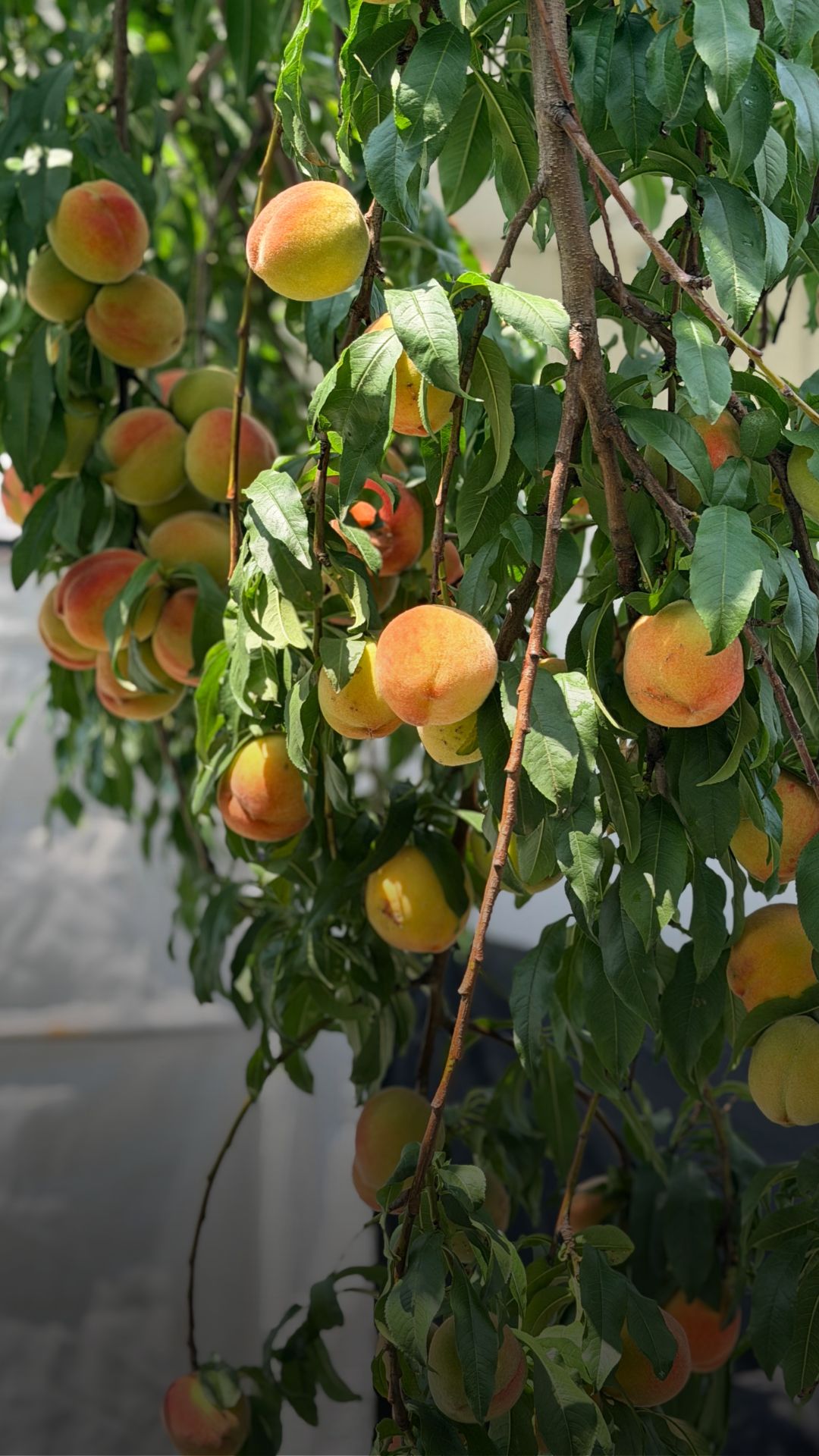
My husband proposed to me under it. We stood in front of it again 45 days later when we were married in our backyard in the middle of the pandemic. We have picked peaches together and fought squirrels together.
Every spring we wait for the blossoms, and every summer we check for the fruit. Every fall we look forward to the leaves changing, and every winter we pray a late cold snap doesn’t kill the buds.
When we planted this tree six years ago, we thought we were just adding a fruit tree to our backyard.
Clearly, we weren’t.
It became the place where our life keeps returning.
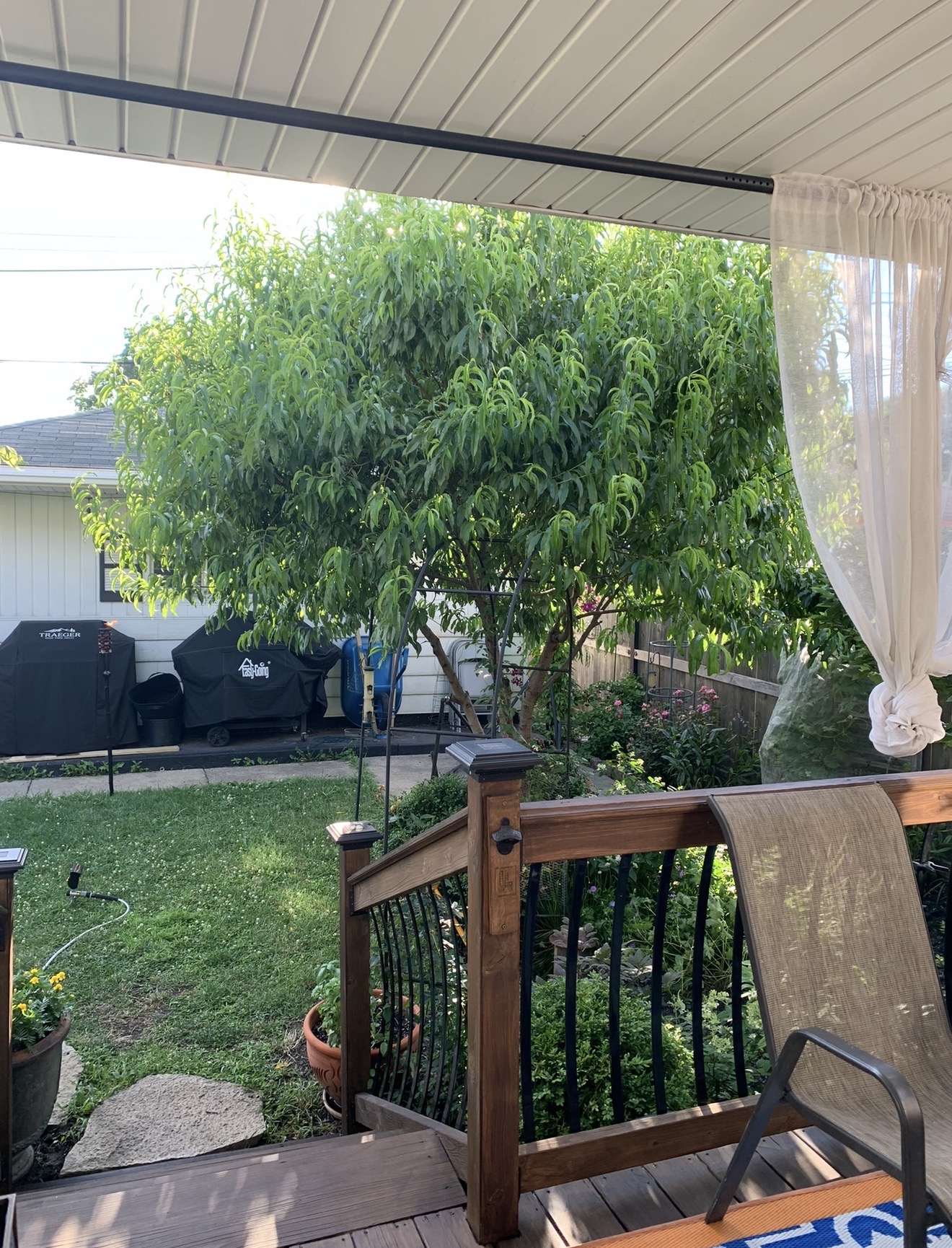
More Than a Fruit Tree
The tag said twelve feet tall, twelve feet wide. That tree is now well over twenty feet in both directions and still growing.
Write this down before you plant anything: nursery tags are guidelines, not promises. Buy the dwarf variety. Read three sources before you dig the hole. Then add a few feet to whatever they tell you.
But here’s what the tag couldn’t tell me. That tree would become one of the most engaging, frustrating, rewarding, and humbling relationships in my garden. Six years in, it still surprises me every single season.
The first three years we grew thirty beautiful peaches and harvested exactly zero of them.
The squirrels were systematic about it in a way that felt almost personal.
Year four we discovered mesh fruit protection bags on Amazon. Large ones. Tied off around individual branches. That year we harvested more than two hundred peaches. Sweet, delicious, worth every minute of wrestling those bags onto branches covered in delicate buds during the windy days of April.
Is it the most beautiful thing? No. A tree wrapped in mesh bags is not the garden image I had in mind.
But there was one year when a late cold snap dropped to eight below zero and killed every bud. No fruit that year. No bags. I stood in the garden that spring and simply looked at the tree in full bloom, unencumbered, and thought, Oh… there you are.
That was a gift I didn’t expect.
There Is Always a Reason to Come Back
In late winter you’re watching for the first signs of life. In spring you’re covering branches and counting buds. In summer you’re harvesting. In fall you’re cleaning up and watching the leaves turn. In winter you’re pruning and dreaming about next year.
There is always a reason to come back.
And before the fruit comes the blossom. A peach tree in full bloom in early spring—clouds of soft pink against bare branches before a single leaf has appeared—is one of the most spectacular things a small garden can offer.
A fruit tree gives back in every season, not just the one when it produces.
And Every Year, It Teaches Us Something New
This year, we got a lot of rain and humidity. It turns out that rain and humidity paired with fruit protection bags limit airflow and create the perfect environment for fungus. A lot of the peaches at the very top of the tree, especially the ones pressed against the bags, began to rot right on the branches.
Next year, we’ll have to treat the tree with an organic fungicide to get it back under control.
Still, I’d use the bags again. Without them, we’d have no peaches at all.
I know this because this year, a squirrel finally got into one.
We’ve been using the same bags for three years, and apparently three years of sun, wind, squirrels, and being wrestled on and off a peach tree is about their limit. One squirrel found his way inside a bag and then refused to leave.
We sprayed the bag with water, thinking surely that would send him running.
Nope.
He stayed for hours.
Eventually, we cut the entire bottom out of the bag so he could escape. He still stayed in there for another hour.
A few days later, he was back working on another bag.
This time he found a tiny opening where the bag met a branch and managed to get one arm through. He just kept waving that little arm around inside the bag, trying desperately to reach a peach that was several inches beyond the limits of squirrel anatomy.
At that point, all we could do was laugh.
We threw every old bag away at the end of the season. Next year, we’ll start fresh.
Note to self: fruit protection bags apparently have a lifespan.
What We Got to Keep
Despite the fungus and the squirrel, we still harvested plenty of peaches.
Some became homemade peach wine. Some became an amazing peach cobbler. Plenty were eaten standing in the kitchen, still warm from outside.
And maybe that is what I love most about growing a fruit tree.
The harvest doesn’t end when you pick the fruit.
It becomes the cobbler you make on a summer afternoon. The wine you’ll open months later. The story about the squirrel who moved into the peach bag and refused to leave. The annual debate about whether the bags are worth all the trouble.
They are.
Six years ago, we planted a peach tree because we wanted peaches.
Since then, my husband has proposed to me beneath it. We’ve gotten married in front of it. We’ve watched it survive bitter winters and late freezes. We’ve protected its fruit, lost its fruit, fought squirrels for its fruit, and turned what we managed to keep into things we could share.
Every year, the tree gives us something to look forward to.
And every year, without really meaning to, we add another story to it.
Perhaps that is why we keep coming back.
Not because it is a peach tree.
Because, somewhere along the way, it became our peach tree.
Continue Reading
Discover more gardens, designers, and stories about living well outdoors in every issue of Alcove. Explore the magazine →
My husband proposed to me under it. We stood in front of it again 45 days later when we were married in our backyard in the middle of the pandemic. We have picked peaches together and fought squirrels together.
Every spring we wait for the blossoms, and every summer we check for the fruit. Every fall we look forward to the leaves changing, and every winter we pray a late cold snap doesn’t kill the buds.
When we planted this tree six years ago, we thought we were just adding a fruit tree to our backyard.
Clearly, we weren’t.
It became the place where our life keeps returning.
More Than a Fruit Tree
The tag said twelve feet tall, twelve feet wide. That tree is now well over twenty feet in both directions and still growing.
Write this down before you plant anything: nursery tags are guidelines, not promises. Buy the dwarf variety. Read three sources before you dig the hole. Then add a few feet to whatever they tell you.
But here’s what the tag couldn’t tell me. That tree would become one of the most engaging, frustrating, rewarding, and humbling relationships in my garden. Six years in, it still surprises me every single season.
The first three years we grew thirty beautiful peaches and harvested exactly zero of them.
The squirrels were systematic about it in a way that felt almost personal.
Year four we discovered mesh fruit protection bags on Amazon. Large ones. Tied off around individual branches. That year we harvested more than two hundred peaches. Sweet, delicious, worth every minute of wrestling those bags onto branches covered in delicate buds during the windy days of April.
Is it the most beautiful thing? No. A tree wrapped in mesh bags is not the garden image I had in mind.
But there was one year when a late cold snap dropped to eight below zero and killed every bud. No fruit that year. No bags. I stood in the garden that spring and simply looked at the tree in full bloom, unencumbered, and thought, Oh… there you are.
That was a gift I didn’t expect.
There Is Always a Reason to Come Back
In late winter you’re watching for the first signs of life. In spring you’re covering branches and counting buds. In summer you’re harvesting. In fall you’re cleaning up and watching the leaves turn. In winter you’re pruning and dreaming about next year.
There is always a reason to come back.
And before the fruit comes the blossom. A peach tree in full bloom in early spring—clouds of soft pink against bare branches before a single leaf has appeared—is one of the most spectacular things a small garden can offer.
A fruit tree gives back in every season, not just the one when it produces.
And Every Year, It Teaches Us Something New
This year, we got a lot of rain and humidity. It turns out that rain and humidity paired with fruit protection bags limit airflow and create the perfect environment for fungus. A lot of the peaches at the very top of the tree, especially the ones pressed against the bags, began to rot right on the branches.
Next year, we’ll have to treat the tree with an organic fungicide to get it back under control.
Still, I’d use the bags again. Without them, we’d have no peaches at all.
I know this because this year, a squirrel finally got into one.
We’ve been using the same bags for three years, and apparently three years of sun, wind, squirrels, and being wrestled on and off a peach tree is about their limit. One squirrel found his way inside a bag and then refused to leave.
We sprayed the bag with water, thinking surely that would send him running.
Nope.
He stayed for hours.
Eventually, we cut the entire bottom out of the bag so he could escape. He still stayed in there for another hour.
A few days later, he was back working on another bag.
This time he found a tiny opening where the bag met a branch and managed to get one arm through. He just kept waving that little arm around inside the bag, trying desperately to reach a peach that was several inches beyond the limits of squirrel anatomy.
At that point, all we could do was laugh.
We threw every old bag away at the end of the season. Next year, we’ll start fresh.
Note to self: fruit protection bags apparently have a lifespan.
What We Got to Keep
Despite the fungus and the squirrel, we still harvested plenty of peaches.
Some became homemade peach wine. Some became an amazing peach cobbler. Plenty were eaten standing in the kitchen, still warm from outside.
And maybe that is what I love most about growing a fruit tree.
The harvest doesn’t end when you pick the fruit.
It becomes the cobbler you make on a summer afternoon. The wine you’ll open months later. The story about the squirrel who moved into the peach bag and refused to leave. The annual debate about whether the bags are worth all the trouble.
They are.
Six years ago, we planted a peach tree because we wanted peaches.
Since then, my husband has proposed to me beneath it. We’ve gotten married in front of it. We’ve watched it survive bitter winters and late freezes. We’ve protected its fruit, lost its fruit, fought squirrels for its fruit, and turned what we managed to keep into things we could share.
Every year, the tree gives us something to look forward to.
And every year, without really meaning to, we add another story to it.
Perhaps that is why we keep coming back.
Not because it is a peach tree.
Because, somewhere along the way, it became our peach tree.
Continue Reading
Discover more gardens, designers, and stories about living well outdoors in every issue of Alcove. Explore the magazine →


