


And what to consider before removing your own lawn.
Last fall, our gardener was taken by ICE.
Suddenly, we were left to manage the very public front yard ourselves, and let me tell you, the front lawn began to look as though the rapture had taken place. The weeds that had been presented as “under control” through weekly mowing were now beginning to make a full public appearance. Thistles now have the opportunity to grow into their full glory and splendor undetected among the hydrangeas and yarrow until it was too late to deny them.
It wasn’t pretty.
The ridiculous thing is, our lawn isn’t that big. On the weeks that the gardener would come to cut the lawn, you might miss him if you blinked.
So you would think that pulling out the lawnmower once a week wouldn’t be such an ordeal. But apparently, for us, it is. We simply aren’t going to mow with the same consistency as someone whose job it is to show up every week to do it.
And the longer I looked at that neglected patch of grass, the more I began to wonder why we were working so hard to keep it in the first place.
A few years ago, we paid to have the entire front lawn replaced.
It looked beautiful, for about two years.
Then the weeds started moving back in. Today, what was once a lovely green lawn is now home to violets, clover, some grass, an alarming number of thistles, and several other weed varieties I couldn’t name if my life depended on it.
They’re all kept at bay with weekly mowing by the gardener, so you wouldn’t notice them at first glance. But trust me, they are there.
Our gardener eventually returned, and he’s taking care of the yard again. But those three months he was gone changed the way I think about our front lawn.
What exactly are we maintaining?
We don’t spend time on it. It doesn’t contribute much to the birds or pollinators. And to keep it looking decent requires a commitment of time and money that I’d rather put toward something beautiful that actually feels like a garden.
As a garden designer, there are plenty of directions I could go.
I could create a romantic cottage garden overflowing with flowers. I could take a more formal approach with clipped shrubs and carefully arranged beds. Or I could do something completely contemporary.
But the more I considered what would work for our small Chicago front yard, the more I kept coming back to naturalistic planting.
Specifically, a naturalistic garden designed using a method called matrix planting.
And the more I learned about how this method could work for our front yard, the more reasons I found to give up the lawn.
1. Why Choose Matrix Planting?

Jon Henry
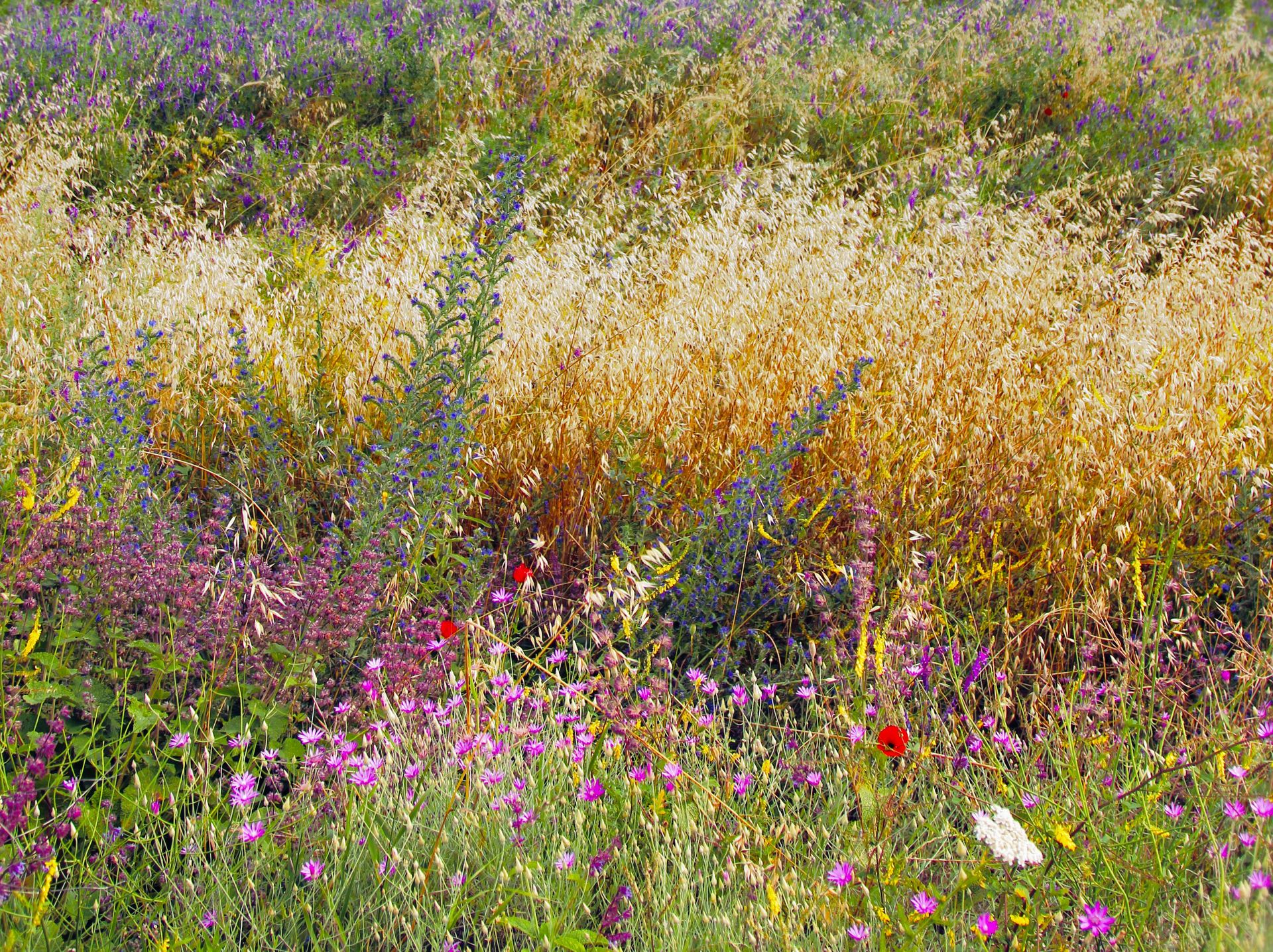
If you’re unfamiliar with matrix planting, the idea is to create a continuous base layer of plants—often ornamental grasses, sedges, or other low-growing plants—with flowering perennials, bulbs, and structural plants woven throughout.
Instead of treating each plant as an individual specimen surrounded by mulch, the plants grow together, forming a community.
And here’s what really got my attention.
As the matrix establishes, the plants begin to knit together, occupying space and intercepting sunlight that would otherwise reach the soil and encourage weed seeds to germinate.
Considering the current state of our front lawn, you can probably understand why that sounded appealing.
Now, I don’t want to give the impression that installing a matrix garden means I’ll never pull another weed.
Far from it.
Our front yard is full of thistle, and thistle isn’t going to just surrender because I’ve planted something prettier above it.
I’ll need to deal with that problem before planting, and I’ll have to be persistent about removing emerging shoots to gradually weaken any root systems that remain.
I’ll also need mulch and regular weeding while the new plants establish.
The first couple of growing seasons will require an investment of time. But eventually, the goal is for the plants I’ve chosen to occupy much of the ground that weeds would otherwise claim.
That’s a much more appealing prospect than continuing to spend money maintaining a lawn I don’t particularly want.
2. How Naturalistic Planting Can Complement Your House
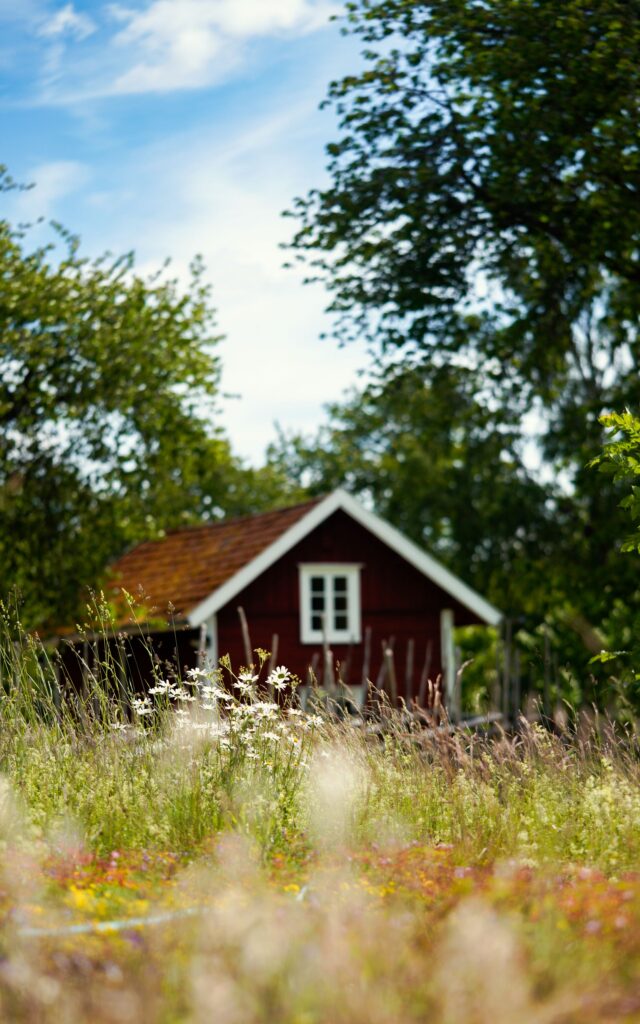
We live in a raised ranch home with strong rooflines and plenty of hard angles.
There’s nothing wrong with that architecture. But I’ve been imagining what those lines would look like softened by ornamental grasses and flowering perennials.
Instead of a sharply defined foundation bed separating the house from the lawn, I’d love to see planting that feels more generous and relaxed.
But here’s the thing about me.
As much as I love the romantic looseness of naturalistic gardens, I’m not one for a completely wild, unstructured look.
I love a little formality.
In fact, one of the combinations I’m considering is clipped boxwood among a matrix of fine-textured grasses with soft pink roses and some other colorful perennials emerging throughout.
It’s that contrast that I love. The discipline of the boxwood against the freedom of the grasses and roses.
The structure gives the eye somewhere to rest, while the softer planting keeps the composition from feeling stiff.
For our house, I think that balance could be beautiful.
And that’s something worth considering when designing your own front garden.
Look at the architecture of your house. Does it have strong, angular lines that could benefit from softer planting? Would a more structured arrangement help balance an exuberant collection of flowers?
Naturalistic planting doesn’t mean abandoning design principles. In fact, a little structure can make the looser planting feel even more beautiful.
The house and garden should look as though they belong together.
3. Are Naturalistic Gardens Really Less Work?
Because when I say I want low maintenance, I want low maintenance…really.
I’m not interested in replacing a lawn that requires weekly attention with a garden that demands even more of my time.
And I know naturalistic gardens aren’t maintenance-free.
A newly planted garden will need watering, weeding, and some patience while the plants establish. Depending on the plants I choose, there may also be some dividing, pruning, or editing as the garden matures.
But what appeals to me is how the maintenance changes once the garden is established.
Most of the ornamental grasses and herbaceous perennials I’m considering can be left standing through winter.
So instead of clearing everything away in autumn, I can enjoy the dried grasses, seed heads, and changing silhouettes throughout the colder months.
Some of those seed heads may provide food for birds, while the dried stems might even find their way into a few textured winter arrangements for the house.
Then, in late winter or early spring, I can cut back much of the previous season’s growth before the new foliage emerges.
And here’s the part I really like.
Rather than bagging up every stem and leaf and hauling it away, I can chop suitable, healthy plant material into smaller pieces and leave it beneath the planting to decompose.
As that material breaks down, it returns organic matter and nutrients to the soil. Over time, that organic matter helps improve soil structure, moisture retention, and the conditions in which plants grow.
The same goes for many of the fall leaves. Instead of treating every fallen leaf as something to remove, I can let them settle among the plants and serve as a natural mulch.
I realize this isn’t everyone’s idea of a tidy landscape.
Some people love the look of freshly cleared beds and a pristine layer of new mulch every spring.
I can appreciate that look.
But I’ve been questioning whether we’ve been trained to expect gardens to look a certain way simply because that’s how we’ve always maintained them.
What if we allowed a little more of the garden’s natural cycle to take place, right in the front yard?
What if we stopped removing so much of what the garden produces, only to bring in bags of amendments and mulch to replace it?
It’s definitely a different look to get used to.
But by the time the grasses and perennials begin growing again in spring, much of that decomposing material will be hidden beneath the new foliage anyway.
That’s a trade I’m happy to make.
And while I’m interested in reducing maintenance, I’m also interested in making the garden more welcoming to wildlife.
I believe native plants deserve an important place in our gardens, but I’m not committed to planting exclusively native species.
I want to incorporate plants that support pollinators and other wildlife alongside well-chosen nonnative ornamentals that suit the growing conditions and the design, should they tickle my fancy.
For me, the goal is a garden that’s both beautiful and more ecologically thoughtful than the lawn it’s replacing.
4. How to Plan for Four Seasons
Gosia Prodan
This might be the part I’m looking forward to the most.
One of the things I love about designing with perennials, bulbs, and ornamental grasses is the possibility of creating a garden that changes throughout the year without constantly replanting it.
Imagine early spring bulbs appearing while the grasses are still waking up.
As the bulbs fade, the emerging grasses begin to conceal their dying foliage. Then the roses and summer perennials come into their own, surrounded by the soft textures of the matrix.
As the season progresses, some flowers fade while others take their place.
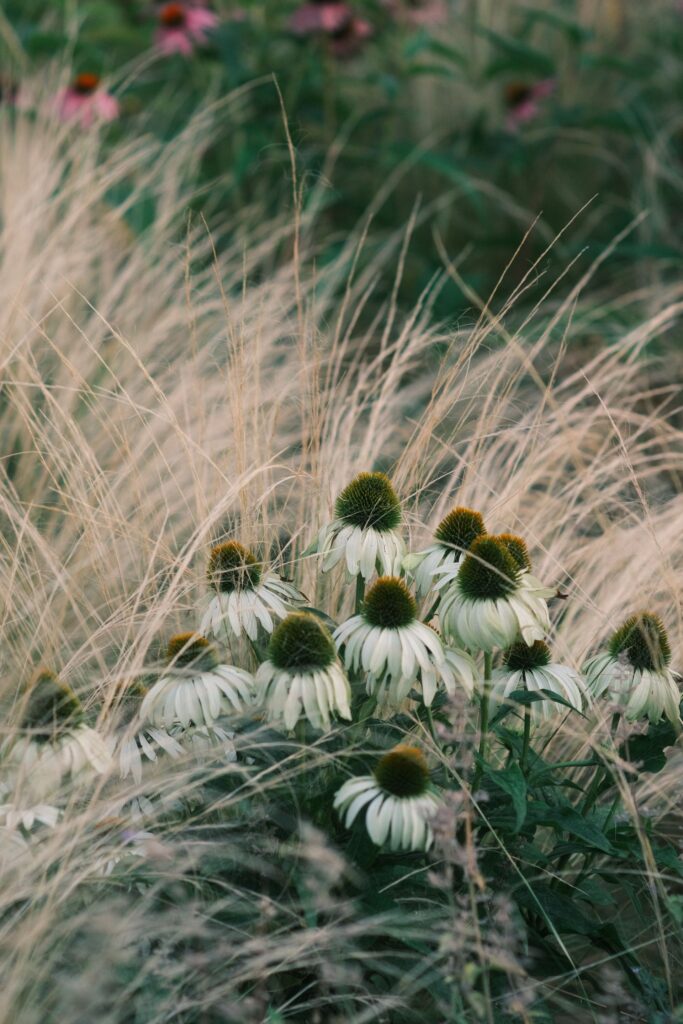
By fall, the grasses may begin turning gold, copper, or burgundy. Some of the summer flowers deepen in color, while others leave behind beautiful seed heads.
And in winter, the garden doesn’t have to disappear.
Dried grasses and seed heads can provide structure and interest, even in the middle of a Chicago winter, especially next to fallen snow…so pretty.
That’s what I want from my front garden.
Not one spectacular month followed by eleven months of disappointment, but a series of smaller moments throughout the year.
And once I’ve selected the right plants, I won’t have to reinvent the entire display every spring.
The garden will have its own rhythm.
Of course, that only works if I choose the plants carefully, considering their growing conditions, mature sizes, flowering seasons, and how they look together.
Planning a garden for four seasons means thinking beyond the plants that catch your attention at the nursery in May.
What will bloom in early spring? What takes over in summer? Which plants develop beautiful fall color? And what will remain standing when everything else has gone dormant?
Those are the questions that help create a garden with something beautiful to offer throughout the year.
5. How to Create More Beauty With Less Lawn
Our gardener is back, and the lawn is being maintained again.
But I’ve made up my mind.
I want to replace that little patch of grass with a garden that offers something beautiful throughout the seasons, supports more life, and doesn’t require us to pull out the lawnmower every week.
We already spent money replacing the lawn once, and that investment didn’t last in the condition we’d hoped.
Then there’s the ongoing cost of maintaining it.
And for what?
A small patch of green that doesn’t contribute very much to the way we live or experience our home.
I’m not suggesting that installing a naturalistic garden will be inexpensive. There will be the cost of removing the existing grass, preparing the ground, purchasing plants, and caring for them while they establish.
And I don’t expect the garden to become completely maintenance-free.
But I’d much rather invest in a garden that becomes more beautiful as it matures than continue spending money trying to keep an ordinary lawn looking like an ordinary lawn.
Even a small front yard has the potential to become something extraordinary.
And I think that’s a much better use of the space.
6. How to Make Your Garden Your Own
This may be my favorite reason for choosing matrix planting.
Matrix planting is a method, not a garden style.
You can use it to create something romantic, formal, prairie-inspired, cottage-like, contemporary, or any other number of styles.
Change the grass or sedge that forms the base layer, choose a different collection of flowering plants, and the entire personality of the garden changes.
One homeowner might choose a fine-textured grass with soft pink roses and lavender-blue flowers to create something romantic.
Another might prefer the stronger colors and upright forms of prairie-inspired planting.
Someone with a shady front garden might use Japanese forest grass with hostas, astilbes, and evergreen shrubs to create something serene and restful.
All three gardens could use the same general principles of matrix planting and look completely different.
That’s important because I believe our gardens should be as unique as we are.
I’d much rather help someone understand how to create a garden that complements their own house and reflects their personality and taste.
I also want the colors of my own garden to complement our house.
I’m leaning toward a romantic palette, with soft pink roses, fine-textured grasses, and the year-round structure of clipped boxwood.
But a different combination could feel serene, exuberant, or contemporary.
The colors, textures, shapes, and heights of the plants all contribute to the feeling a garden creates.
The matrix gives me a framework, but it doesn’t dictate the personality of the garden.
There are so many possibilities.
What to Do Before Removing the Grass
So where do you begin if you’re considering replacing your own small front lawn?
Before you start removing grass or buying plants, I’d consider a few things.
Take a good look at what’s already growing. Are you dealing with ordinary lawn grass, annual weeds, or established perennial weeds with extensive root systems? Some will require more preparation than others.
Understand your growing conditions. How much sunlight does the front yard receive? Is the soil consistently moist, dry, or somewhere in between? These conditions will help determine which matrix plants and flowering perennials belong in your garden.
Think about the house. Consider its architecture, exterior colors, and the atmosphere you’d like to create. Your garden should complement your home, not compete with it.
Decide how much lawn you’re ready to remove. You don’t necessarily have to transform the entire front yard at once. Working in phases may make the project more manageable, although you’ll need to consider how to maintain the remaining lawn and keep grass from spreading into the new planting.
Choose a lawn-removal method. Sheet mulching, cutting and removing sod, and other approaches all have advantages and tradeoffs. The right choice depends on your existing vegetation, soil conditions, and how quickly you want to begin planting.
These are decisions I’m making for my own front yard right now.
There’s grass to remove, thistles to manage, soil to prepare, plants to select, and a design to work out before anything goes into the ground.
I’ll be sharing those decisions, along with what I learn along the way, here on Alcove.
Because I suspect I’m not the only person looking at a small front lawn and wondering whether there’s a better use for that space.
I can already imagine the grasses catching the afternoon light, soft pink roses against the boxwood, bulbs appearing in spring, and a garden that offers something beautiful to look at even in winter.
Most of all, I can imagine looking out the front window and seeing something worth growing instead of another lawn that needs mowing.
I spent money putting grass there.
Now I’m ready to spend my time creating something I’d actually like to look at.
And I have a feeling this will be a much better investment.
And what to consider before removing your own lawn.
Last fall, our gardener was taken by ICE.
Suddenly, we were left to manage the very public front yard ourselves, and let me tell you, the front lawn began to look as though the rapture had taken place. The weeds that had been presented as “under control” through weekly mowing were now beginning to make a full public appearance. Thistles now have the opportunity to grow into their full glory and splendor undetected among the hydrangeas and yarrow until it was too late to deny them.
It wasn’t pretty.
The ridiculous thing is, our lawn isn’t that big. On the weeks that the gardener would come to cut the lawn, you might miss him if you blinked.
So you would think that pulling out the lawnmower once a week wouldn’t be such an ordeal. But apparently, for us, it is. We simply aren’t going to mow with the same consistency as someone whose job it is to show up every week to do it.
And the longer I looked at that neglected patch of grass, the more I began to wonder why we were working so hard to keep it in the first place.
A few years ago, we paid to have the entire front lawn replaced.
It looked beautiful, for about two years.
Then the weeds started moving back in. Today, what was once a lovely green lawn is now home to violets, clover, some grass, an alarming number of thistles, and several other weed varieties I couldn’t name if my life depended on it.
They’re all kept at bay with weekly mowing by the gardener, so you wouldn’t notice them at first glance. But trust me, they are there.
Our gardener eventually returned, and he’s taking care of the yard again. But those three months he was gone changed the way I think about our front lawn.
What exactly are we maintaining?
We don’t spend time on it. It doesn’t contribute much to the birds or pollinators. And to keep it looking decent requires a commitment of time and money that I’d rather put toward something beautiful that actually feels like a garden.
As a garden designer, there are plenty of directions I could go.
I could create a romantic cottage garden overflowing with flowers. I could take a more formal approach with clipped shrubs and carefully arranged beds. Or I could do something completely contemporary.
But the more I considered what would work for our small Chicago front yard, the more I kept coming back to naturalistic planting.
Specifically, a naturalistic garden designed using a method called matrix planting.
And the more I learned about how this method could work for our front yard, the more reasons I found to give up the lawn.
1. Why Choose Matrix Planting?
Jon Henry
If you’re unfamiliar with matrix planting, the idea is to create a continuous base layer of plants—often ornamental grasses, sedges, or other low-growing plants—with flowering perennials, bulbs, and structural plants woven throughout.
Instead of treating each plant as an individual specimen surrounded by mulch, the plants grow together, forming a community.
And here’s what really got my attention.
As the matrix establishes, the plants begin to knit together, occupying space and intercepting sunlight that would otherwise reach the soil and encourage weed seeds to germinate.
Considering the current state of our front lawn, you can probably understand why that sounded appealing.
Now, I don’t want to give the impression that installing a matrix garden means I’ll never pull another weed.
Far from it.
Our front yard is full of thistle, and thistle isn’t going to just surrender because I’ve planted something prettier above it.
I’ll need to deal with that problem before planting, and I’ll have to be persistent about removing emerging shoots to gradually weaken any root systems that remain.
I’ll also need mulch and regular weeding while the new plants establish.
The first couple of growing seasons will require an investment of time. But eventually, the goal is for the plants I’ve chosen to occupy much of the ground that weeds would otherwise claim.
That’s a much more appealing prospect than continuing to spend money maintaining a lawn I don’t particularly want.
2. How Naturalistic Planting Can Complement Your House
We live in a raised ranch home with strong rooflines and plenty of hard angles.
There’s nothing wrong with that architecture. But I’ve been imagining what those lines would look like softened by ornamental grasses and flowering perennials.
Instead of a sharply defined foundation bed separating the house from the lawn, I’d love to see planting that feels more generous and relaxed.
But here’s the thing about me.
As much as I love the romantic looseness of naturalistic gardens, I’m not one for a completely wild, unstructured look.
I love a little formality.
In fact, one of the combinations I’m considering is clipped boxwood among a matrix of fine-textured grasses with soft pink roses and some other colorful perennials emerging throughout.
It’s that contrast that I love. The discipline of the boxwood against the freedom of the grasses and roses.
The structure gives the eye somewhere to rest, while the softer planting keeps the composition from feeling stiff.
For our house, I think that balance could be beautiful.
And that’s something worth considering when designing your own front garden.
Look at the architecture of your house. Does it have strong, angular lines that could benefit from softer planting? Would a more structured arrangement help balance an exuberant collection of flowers?
Naturalistic planting doesn’t mean abandoning design principles. In fact, a little structure can make the looser planting feel even more beautiful.
The house and garden should look as though they belong together.
3. Are Naturalistic Gardens Really Less Work?
Because when I say I want low maintenance, I want low maintenance…really.
I’m not interested in replacing a lawn that requires weekly attention with a garden that demands even more of my time.
And I know naturalistic gardens aren’t maintenance-free.
A newly planted garden will need watering, weeding, and some patience while the plants establish. Depending on the plants I choose, there may also be some dividing, pruning, or editing as the garden matures.
But what appeals to me is how the maintenance changes once the garden is established.
Most of the ornamental grasses and herbaceous perennials I’m considering can be left standing through winter.
So instead of clearing everything away in autumn, I can enjoy the dried grasses, seed heads, and changing silhouettes throughout the colder months.
Some of those seed heads may provide food for birds, while the dried stems might even find their way into a few textured winter arrangements for the house.
Then, in late winter or early spring, I can cut back much of the previous season’s growth before the new foliage emerges.
And here’s the part I really like.
Rather than bagging up every stem and leaf and hauling it away, I can chop suitable, healthy plant material into smaller pieces and leave it beneath the planting to decompose.
As that material breaks down, it returns organic matter and nutrients to the soil. Over time, that organic matter helps improve soil structure, moisture retention, and the conditions in which plants grow.
The same goes for many of the fall leaves. Instead of treating every fallen leaf as something to remove, I can let them settle among the plants and serve as a natural mulch.
I realize this isn’t everyone’s idea of a tidy landscape.
Some people love the look of freshly cleared beds and a pristine layer of new mulch every spring.
I can appreciate that look.
But I’ve been questioning whether we’ve been trained to expect gardens to look a certain way simply because that’s how we’ve always maintained them.
What if we allowed a little more of the garden’s natural cycle to take place, right in the front yard?
What if we stopped removing so much of what the garden produces, only to bring in bags of amendments and mulch to replace it?
It’s definitely a different look to get used to.
But by the time the grasses and perennials begin growing again in spring, much of that decomposing material will be hidden beneath the new foliage anyway.
That’s a trade I’m happy to make.
And while I’m interested in reducing maintenance, I’m also interested in making the garden more welcoming to wildlife.
I believe native plants deserve an important place in our gardens, but I’m not committed to planting exclusively native species.
I want to incorporate plants that support pollinators and other wildlife alongside well-chosen nonnative ornamentals that suit the growing conditions and the design, should they tickle my fancy.
For me, the goal is a garden that’s both beautiful and more ecologically thoughtful than the lawn it’s replacing.
4. How to Plan for Four Seasons
Gosia Prodan
This might be the part I’m looking forward to the most.
One of the things I love about designing with perennials, bulbs, and ornamental grasses is the possibility of creating a garden that changes throughout the year without constantly replanting it.
Imagine early spring bulbs appearing while the grasses are still waking up.
As the bulbs fade, the emerging grasses begin to conceal their dying foliage. Then the roses and summer perennials come into their own, surrounded by the soft textures of the matrix.
As the season progresses, some flowers fade while others take their place.
By fall, the grasses may begin turning gold, copper, or burgundy. Some of the summer flowers deepen in color, while others leave behind beautiful seed heads.
And in winter, the garden doesn’t have to disappear.
Dried grasses and seed heads can provide structure and interest, even in the middle of a Chicago winter, especially next to fallen snow…so pretty.
That’s what I want from my front garden.
Not one spectacular month followed by eleven months of disappointment, but a series of smaller moments throughout the year.
And once I’ve selected the right plants, I won’t have to reinvent the entire display every spring.
The garden will have its own rhythm.
Of course, that only works if I choose the plants carefully, considering their growing conditions, mature sizes, flowering seasons, and how they look together.
Planning a garden for four seasons means thinking beyond the plants that catch your attention at the nursery in May.
What will bloom in early spring? What takes over in summer? Which plants develop beautiful fall color? And what will remain standing when everything else has gone dormant?
Those are the questions that help create a garden with something beautiful to offer throughout the year.
5. How to Create More Beauty With Less Lawn
Our gardener is back, and the lawn is being maintained again.
But I’ve made up my mind.
I want to replace that little patch of grass with a garden that offers something beautiful throughout the seasons, supports more life, and doesn’t require us to pull out the lawnmower every week.
We already spent money replacing the lawn once, and that investment didn’t last in the condition we’d hoped.
Then there’s the ongoing cost of maintaining it.
And for what?
A small patch of green that doesn’t contribute very much to the way we live or experience our home.
I’m not suggesting that installing a naturalistic garden will be inexpensive. There will be the cost of removing the existing grass, preparing the ground, purchasing plants, and caring for them while they establish.
And I don’t expect the garden to become completely maintenance-free.
But I’d much rather invest in a garden that becomes more beautiful as it matures than continue spending money trying to keep an ordinary lawn looking like an ordinary lawn.
Even a small front yard has the potential to become something extraordinary.
And I think that’s a much better use of the space.
6. How to Make Your Garden Your Own
This may be my favorite reason for choosing matrix planting.
Matrix planting is a method, not a garden style.
You can use it to create something romantic, formal, prairie-inspired, cottage-like, contemporary, or any other number of styles.
Change the grass or sedge that forms the base layer, choose a different collection of flowering plants, and the entire personality of the garden changes.
One homeowner might choose a fine-textured grass with soft pink roses and lavender-blue flowers to create something romantic.
Another might prefer the stronger colors and upright forms of prairie-inspired planting.
Someone with a shady front garden might use Japanese forest grass with hostas, astilbes, and evergreen shrubs to create something serene and restful.
All three gardens could use the same general principles of matrix planting and look completely different.
That’s important because I believe our gardens should be as unique as we are.
I’d much rather help someone understand how to create a garden that complements their own house and reflects their personality and taste.
I also want the colors of my own garden to complement our house.
I’m leaning toward a romantic palette, with soft pink roses, fine-textured grasses, and the year-round structure of clipped boxwood.
But a different combination could feel serene, exuberant, or contemporary.
The colors, textures, shapes, and heights of the plants all contribute to the feeling a garden creates.
The matrix gives me a framework, but it doesn’t dictate the personality of the garden.
There are so many possibilities.
What to Do Before Removing the Grass
So where do you begin if you’re considering replacing your own small front lawn?
Before you start removing grass or buying plants, I’d consider a few things.
Take a good look at what’s already growing. Are you dealing with ordinary lawn grass, annual weeds, or established perennial weeds with extensive root systems? Some will require more preparation than others.
Understand your growing conditions. How much sunlight does the front yard receive? Is the soil consistently moist, dry, or somewhere in between? These conditions will help determine which matrix plants and flowering perennials belong in your garden.
Think about the house. Consider its architecture, exterior colors, and the atmosphere you’d like to create. Your garden should complement your home, not compete with it.
Decide how much lawn you’re ready to remove. You don’t necessarily have to transform the entire front yard at once. Working in phases may make the project more manageable, although you’ll need to consider how to maintain the remaining lawn and keep grass from spreading into the new planting.
Choose a lawn-removal method. Sheet mulching, cutting and removing sod, and other approaches all have advantages and tradeoffs. The right choice depends on your existing vegetation, soil conditions, and how quickly you want to begin planting.
These are decisions I’m making for my own front yard right now.
There’s grass to remove, thistles to manage, soil to prepare, plants to select, and a design to work out before anything goes into the ground.
I’ll be sharing those decisions, along with what I learn along the way, here on Alcove.
Because I suspect I’m not the only person looking at a small front lawn and wondering whether there’s a better use for that space.
I can already imagine the grasses catching the afternoon light, soft pink roses against the boxwood, bulbs appearing in spring, and a garden that offers something beautiful to look at even in winter.
Most of all, I can imagine looking out the front window and seeing something worth growing instead of another lawn that needs mowing.
I spent money putting grass there.
Now I’m ready to spend my time creating something I’d actually like to look at.
And I have a feeling this will be a much better investment.


